
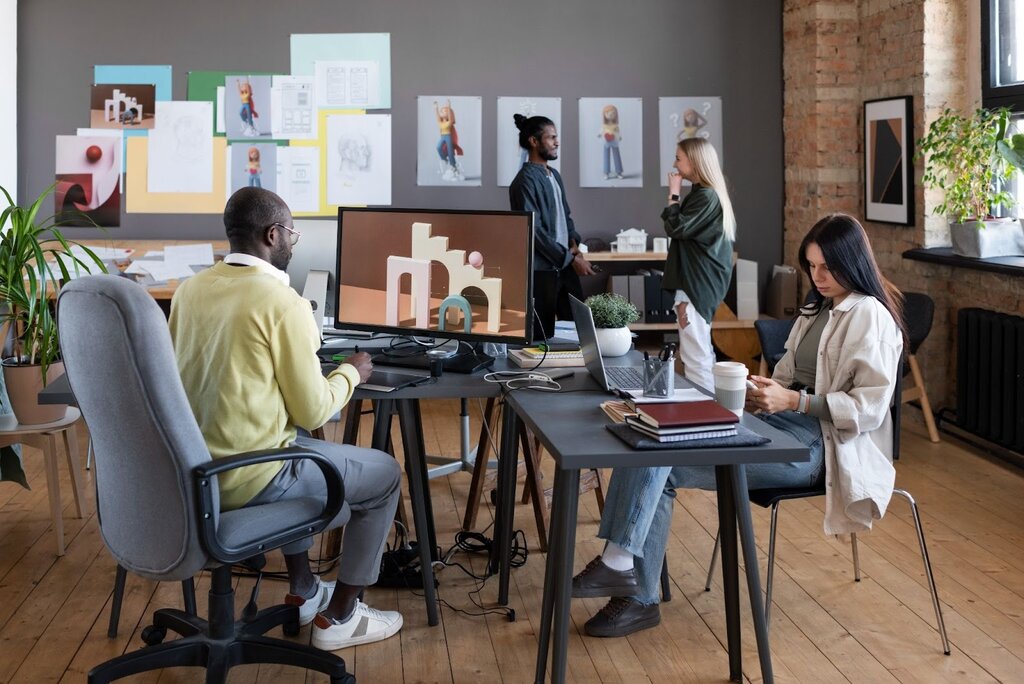
Here’s something most people overlook: where you plant yourself to work carries more weight than you’d think. Your physical location, be it a cramped home office, the daily grind to a corporate building, or a rotating desk situation, dictates everything from how awake you feel to whether you can tackle those brain-intensive projects.
Still, tons of professionals brush off how location affects productivity and their overall job satisfaction. This goes way beyond hunting for the prettiest desk or a window with a view. What really matters? Things like how long you’re stuck in traffic, whether you’re battling noise pollution, if you’re breathing decent air, the social vibe around you, what you’re spending, how flexible your setup is, and whether you can grab lunch without losing half your afternoon.
Ahead, you’ll find actionable frameworks, concrete metrics, and smart location tactics that boost remote work productivity, enhance office location and employee productivity, and transform your workplace location and work experience.
Location as a “Performance System”: The Real Drivers of Productivity (Beyond the Desk)
Think of your workspace as more than desks and dividers. It’s actually a living system constantly dialing four variables up or down: energy, attention, time, and mood.
The productivity equation (energy + attention + time + mood)
Where you work controls how much sleep you squeeze in (thanks to commute schedules), your mental load (interruptions and racket), and your drive (social pressure or lonely isolation). Try this quick check-in: How wiped out are you by 3 PM? How many solid, unbroken hours did you actually focus today? How much effort went into bouncing back from meetings or fighting off distractions? Your answers will swing wildly depending on your work address.
Work environment impact on productivity, physical, social, and digital layers
The work environment’s impact on productivity cuts way deeper than whether your chair hurts your back. Physical factors include lighting quality, whether you’re freezing or sweating, the air you’re breathing, and sound control. Social dimensions cover collaboration intensity, a sense of community, accountability, or the risks of dangerous isolation, often why people start searching for a co working space near me instead of working alone.
The digital backbone, stable internet, seamless tool access, frictionless meetings, and solid security protections, completes the triangle. When any one of these pieces crumbles, productivity takes a real hit.
Grasping these performance levers matters, but if you’re office-bound, one element towers above everything else before your workday even kicks off: the commute and daily hassles connected to office placement.
Office Location and Employee Productivity: The Commute, Access, and Daily Friction
Your commute isn’t just dead time. It’s invisible labor draining your focus tank before you even log on.
Commute time as “hidden work” (and how it erodes focus)
Lengthy commutes burn through decision-making capacity and steal mental energy needed for tough thinking. Most people hit their limit around 30 minutes each way. Push past that threshold, and you’re essentially borrowing energy from tasks that desperately need it. Tweaking your start time or clustering meetings on heavy-commute days can help you claw back some reserves.
Access to transit, parking, and walkability (time regained = productivity gained)
How close you are to transit, safe pathways, bike racks, and that last stretch of convenience directly determines how much time you reclaim weekly. Do the math: time saved each week converts into focused work sessions. Even recapturing 90 minutes weekly means one extra deep-dive slot, or just breathing room.
Local amenities that amplify output
Take Chennai’s Navalur neighborhood, for example, it’s packed with growing infrastructure, including tech campuses, food spots, and green patches all within arm’s reach. Building your own “15-minute work radius” where you can knock out errands, fuel up, or decompress quickly helps you dodge interruptions and keep momentum alive.
Plenty of professionals discover that searching for a co working space near me in well-connected areas like Navalur cuts daily hassle while keeping life’s essentials nearby for smoother, more productive days. While office workers wrestle with commute exhaustion and transit headaches, remote workers wrestle with a totally different beast, one where your home either supercharges focus or quietly sabotages everything.
Remote Work Productivity: When Home Location Helps, or Hurts, Your Output
Not every home setup supports serious concentration. Paper-thin walls, jackhammer symphonies, housemates wandering through, cramped quarters, all real obstacles.
Home setup realities by neighborhood (noise, space, reliability)
Noise patterns shift throughout the day and vary wildly by neighborhood. Practical solutions? Basic soundproofing tricks, scheduling deep thinking during calmer hours, and scouting backup work spots when your home situation won’t cooperate.
Internet and power stability as productivity infrastructure
Video meetings and cloud platforms demand minimum performance for upload/download speeds and lag. Always have a Plan B: backup mobile hotspot, coworking day passes, or offline task lists when your connection betrays you. Reliability isn’t a luxury, it’s the foundation of remote work productivity.
Isolation vs. autonomy, location’s psychological trade-offs
Solo work gives you control but risks motivation fade and accountability holes. Simple fixes work wonders: maintain social rhythm (two or three weekly check-ins), experiment with body-doubling sessions, or schedule coworking days to crack isolation cycles without sacrificing focus windows.
Whether you’re remote or office-based, psychological and logistical factors are just part of the story, your physical surroundings exert measurable, research-backed force on brain performance that most workers completely miss.
Work Environment Impact on Productivity: The Science of Surroundings (That Competitors Miss)
Light exposure, circadian rhythm, and cognitive performance
Morning light sharpens focus; evening light management protects sleep quality. Park your desk near windows whenever you can, deploy task lighting for detail work, and tackle glare to save your eyes.
Indoor air quality and CO₂ levels (the invisible productivity killer)
CO₂ creep causes drowsiness without obvious warnings. Affordable CO₂ monitors let you spot ventilation tanks. Aim for readings below 1,000 ppm, crack windows regularly, and match air purifiers to your space size.
Acoustic design for focus and creativity
Sporadic noise (chatter, ringing phones) damages concentration more than a steady background hum. Zoning your space, deploying white noise, grabbing quality noise-canceling headphones, or reserving phone booths at coworking spots all guard your attention.
Beyond your physical workspace, location shapes something subtler: how connected, visible, and satisfied you feel, forces that directly steer retention, advancement, and lasting happiness.
Workplace Location and Work Experience: Culture, Belonging, and Career Growth
Social proximity and mentorship access
Face-to-face proximity fuels informal learning and career visibility. Anchor days, dedicated team collaboration windows, and office hours help hybrid squads capture these wins without mandating daily commutes.
Equity and inclusion effects are tied to location
Commute burdens, safety realities, and accessibility requirements vary massively across your team. Flexible scheduling, commuter subsidies, and satellite locations create fairer opportunity access.
Career outcomes and “opportunity density”
Networking gatherings, industry clusters, and client closeness concentrate in specific locations. Pick environments that boost serendipitous chances without tipping into the burnout zone.
With clearer insight into how location drives both performance and experience, your next move is practical: crafting a decision system to match work modes with the right environments throughout your week.
Choosing the Best Work Location: A Practical Framework (Home vs Office vs Coworking vs Hybrid)
Work-mode matching (deep work, collaboration, client calls, creative work)
Map your tasks to locations strategically. Deep work craves quiet, private territory. Collaboration demands shared space. Calls need acoustic control. Creative brainstorming often thrives in energizing settings.
Weekly location strategy (instead of one “perfect” location)
Employees clocked an average productivity jump of 19% under hybrid setups, basically gaining an extra 7.6 productive hours weekly. Try splitting things up: two days coworking for meetings and community connection, two days home for intense focus work, one day at the office for team rituals. Time-blocking cuts down context-switching chaos.
For professionals testing this framework, coworking spaces frequently emerge as high-impact options, but not all spaces actually deliver the productivity upgrades they advertise, so let’s examine what genuinely counts.
“Co-Working Space Near Me” as a Productivity Upgrade: Features That Actually Matter
Layout choices that improve output (hot desk vs dedicated desk vs private office)
Match layout to your work rhythm and privacy requirements. Hot desks suit drop-in users. Dedicated desks provide consistency. Private offices deliver quiet control. Each serves distinct work patterns.
Productivity-critical amenities checklist (not fluff)
Phone booths, meeting rooms, ergonomic seating, secure Wi-Fi, designated quiet zones, printing access, and lockers aren’t bonus features, they’re essentials for real work. Don’t fall for pretty design over a functional backbone.
Selecting a coworking space (or any location) only matters if you can measure whether it’s genuinely improving your results, here’s how to track wins and adjust fast.
Measuring Location-Driven Productivity: Metrics, Experiments, and Tools
Personal metrics that reveal whether a location works
Monitor deep work hours, task completion rates, meeting exhaustion, mood ratings, and end-of-day energy reserves. A basic notes app or spreadsheet handles this fine for most folks.
14-day location experiment (A/B test your workspace)
Choose two locations, define your tasks, hold variables steady, and compare outcomes. Don’t chase busyness, chase meaningful results and sustainable energy.
As you sharpen your personal tracking, notice how the bigger picture of work location is evolving, emerging patterns are opening fresh opportunities and risks that smart professionals are already exploiting.
Trending + Innovative Factors Changing Location and Productivity
“Third places” and neighborhood work hubs replacing central offices
Distributed coworking, suburban hubs, and micro-offices slash commute time while preserving social energy. This wave helps professionals wanting community minus downtown chaos.
AI-enabled work amplifies the need for focus-friendly locations
AI tools compress task time but amplify demands for uninterrupted thinking and quality verification. Prioritize quiet zones, bulletproof internet, and meeting-ready infrastructure to maximize AI-assisted output.
Even knowing these trends, plenty of professionals still stumble into predictable location mistakes that quietly drain productivity. Let’s spot the most common traps and their solutions.
Common Location Mistakes That Reduce Productivity (and Fixes That Work)
Choosing vibe over function
Pretty aesthetics don’t guarantee performance. Match location to task type and environmental needs first. Function drives form.
Ignoring recovery and overstaying in high-stimulation areas
High-energy environments exhaust you faster than you’d expect. Build in decompression breaks and quiet recovery blocks to balance stimulation with restoration.
Spotting mistakes helps, but action creates momentum, here’s your concrete plan to optimize location and reclaim productive hours starting immediately.
Action Plan: Improve Productivity by Optimizing Your Location This Week
60-minute workspace reset (home/office/coworking)
Tweak lighting, seating, and noise management. Wrangle cables. Verify ergonomic setup. Tiny adjustments compound fast with daily repetition.
3 changes with the highest ROI
Cut the commute burden one day weekly. Add one ultra-quiet deep-work location with reliable conditions. Establish a repeatable routine with clear start and finish rituals signaling focus mode.
Making Your Location Work for You
Location isn’t destiny, but it’s definitely not neutral territory. The spaces you pick each week sculpt your concentration, vitality, and long-haul satisfaction way more than most people grasp. Small, intentional shifts, shaving commute minutes, trying a peaceful coworking day, or locking in a sustainable routine, produce compound benefits. Launch one tweak this week. Notice how it lands. Then adjust your game plan based on real data from your own experience.
Your Questions About Location and Productivity, Answered
1. How does the workplace environment affect productivity?
Neuroscience evidence confirms employees perform better and work more efficiently when environments include rewards and minimize threats. A stressed brain struggles with creativity, collaboration, and problem-solving.
2. How does location affect the success of the business?
Office placement determines access to market forces, clients, and critical resources. It also molds brand perception by functioning as an identity landmark, shaping customer confidence and employee attraction.
3. What is the best location for remote work productivity?
The ideal spot offers dependable internet, minimal disruptions, comfortable ergonomics, and adaptability based on what you’re tackling. Many professionals rotate among home, coworking environments, and quiet cafés matching daily demands.