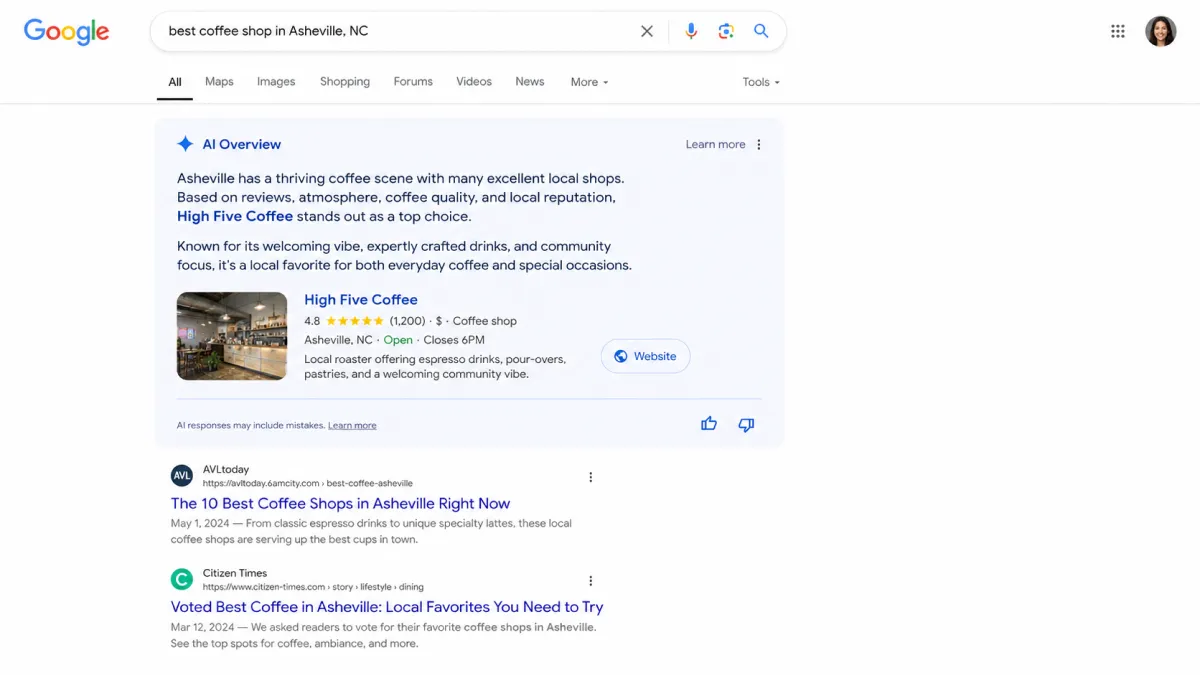
Something shifted in Google Search, and most business owners haven’t noticed yet. When your potential customer types “best plumber in Victoria TX” or “how much does a new AC unit cost,” Google no longer just shows a list of websites. It generates an AI-written summary right at the top of the page, pulls information from a handful of sources, and answers the question before anyone scrolls down.
That AI summary is called an AI Overview. And right now, it’s either quoting your business or your competitor’s. There’s not much room in between.
What Google AI Overviews Actually Are
AI Overviews are AI-generated summaries that appear above the traditional search results on Google. They pull from multiple web sources, synthesize the information, and present a concise answer. Sometimes they include links to the sources. Sometimes they don’t. Either way, they dominate the top of the page.
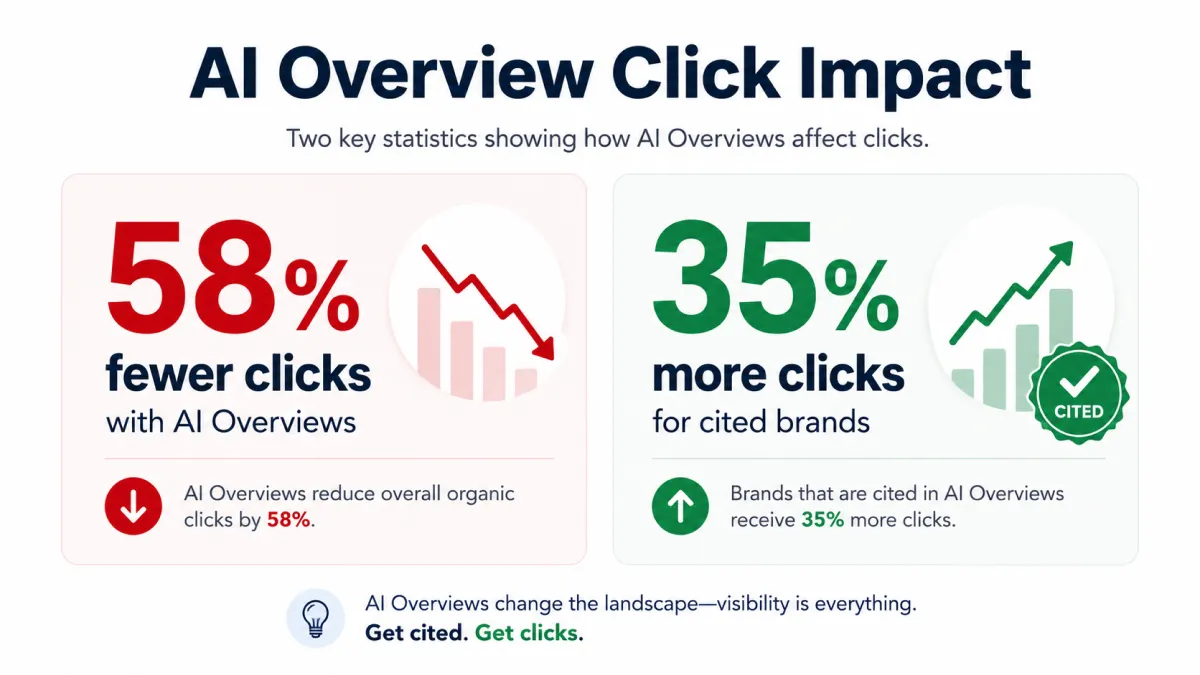
Research from Ahrefs shows that AI Overviews now reduce clicks to traditional results by 58%. Organic click-through rates drop from 15% to 8% when an AI Overview is present. And here’s the stat that should keep you up at night: 99% of queries that trigger AI Overviews are informational, meaning they’re the exact questions your customers ask before they buy.
Why Being Cited Matters More Than Ranking
Here’s the twist. Brands that get cited inside an AI Overview actually see 35% more organic clicks than those that don’t. While overall clicks are falling, the businesses that Google’s AI trusts enough to quote are capturing a larger share of a smaller pie.
Think about that for a second. There used to be 10 spots on page one. Now there’s an AI summary that references maybe 3 to 5 sources. If you’re one of those sources, you’re getting attention that 10 competitors used to share. If you’re not, you’re buried beneath an AI wall that most users never scroll past.
What Makes Google’s AI Choose Your Content
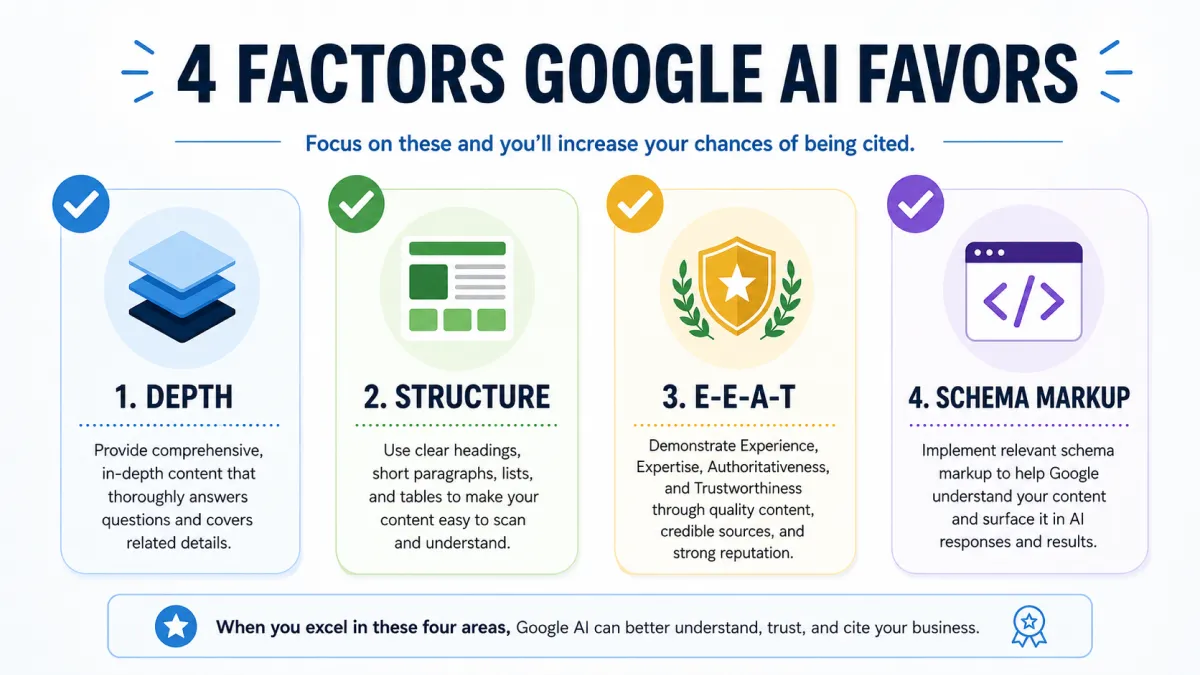
Google’s AI doesn’t pick randomly. It favors content with specific characteristics:
Depth and specificity. Generic service pages that say “We provide quality service” get ignored. Pages that explain exactly what a service costs, how long it takes, what the process looks like, and what to expect afterward get cited. The AI wants content that sounds like it came from someone who actually does the work.
Clear structure. AI Overviews pull from content that’s organized with clear headings, concise paragraphs, and answer-first formatting. If your key information is buried in the third paragraph of a 2,000-word page, the AI will skip you and find someone who puts the answer up front.
E-E-A-T signals. Experience, Expertise, Authoritativeness, and Trustworthiness aren’t just SEO buzzwords anymore. Google’s AI actively looks for author credentials, real-world examples, specific numbers, and verifiable claims. A blog post that says “In our 15 years serving the Victoria area, we’ve replaced over 500 AC units” carries more weight than one that says “We’re experienced professionals.”
Schema markup. FAQ schema, HowTo schema, and LocalBusiness schema give Google’s AI structured data it can confidently extract. Businesses with clean schema markup are significantly more likely to appear in AI-generated answers.
The Content Google’s AI Ignores
If your website reads like a brochure, the AI will treat it like one: nice to look at, nothing to quote. Pages that are thin on detail, heavy on marketing fluff, and missing specific data points don’t get cited. Product pages with no pricing ranges get skipped. Service pages with no process explanation get skipped. Blog posts that reword the first page of Google results without adding anything new get skipped.
The AI is also picking up on user-generated content. Reddit accounts for 21% of AI Overview citations. YouTube transcripts make up nearly 19%. Google’s AI trusts real conversations and real demonstrations, sometimes more than polished marketing pages.
How to Get Your Business Cited in AI Overviews
Start with your most important service pages. Rewrite them to lead with clear, concise answers to the questions customers ask most. Add FAQ sections with real questions pulled from your sales calls, not generic marketing prompts. Include specific numbers: pricing ranges, timelines, service area details, years of experience.
Add or update your schema markup. At minimum, every service page should have FAQ schema and LocalBusiness schema. Blog posts should have Article schema. Step-by-step guides should have HowTo schema. This structured data is the backbone of AI-readable content.
Build your brand mentions across the web. Get listed on reputable directories. Earn mentions in local news, industry blogs, and community sites. Respond to every Google review with specific, thoughtful replies. AI systems cross-reference these signals to determine if your business is real, active, and trustworthy.
Want Google’s AI quoting your business instead of your competitors? Building Brands Marketing builds content strategies designed for both traditional search and AI-generated answers. We’ll audit your current visibility and build a plan that gets you cited. Reach out for a free consultation.
Frequently Asked Questions
What are Google AI Overviews?
AI Overviews are AI-generated summaries that appear at the top of Google search results, pulling from multiple web sources to answer queries before users click any links.
How do I get my business cited in Google AI Overviews?
Create content with clear structure, specific details, FAQ schema markup, and strong E-E-A-T signals. Google’s AI favors pages that answer questions directly and demonstrate real expertise.
Do AI Overviews hurt website traffic?
Overall click-through rates drop 58% when AI Overviews appear. But brands cited within the AI Overview see 35% more organic clicks, making citation more valuable than traditional ranking position alone.