

You set up a Google Ads campaign. You picked some keywords. You set a daily budget. And then you moved on to the 47 other things on your plate. Three months later, you’ve spent $3,000 and have no idea what you got for it. Maybe some clicks. Maybe some leads. Maybe nothing at all.
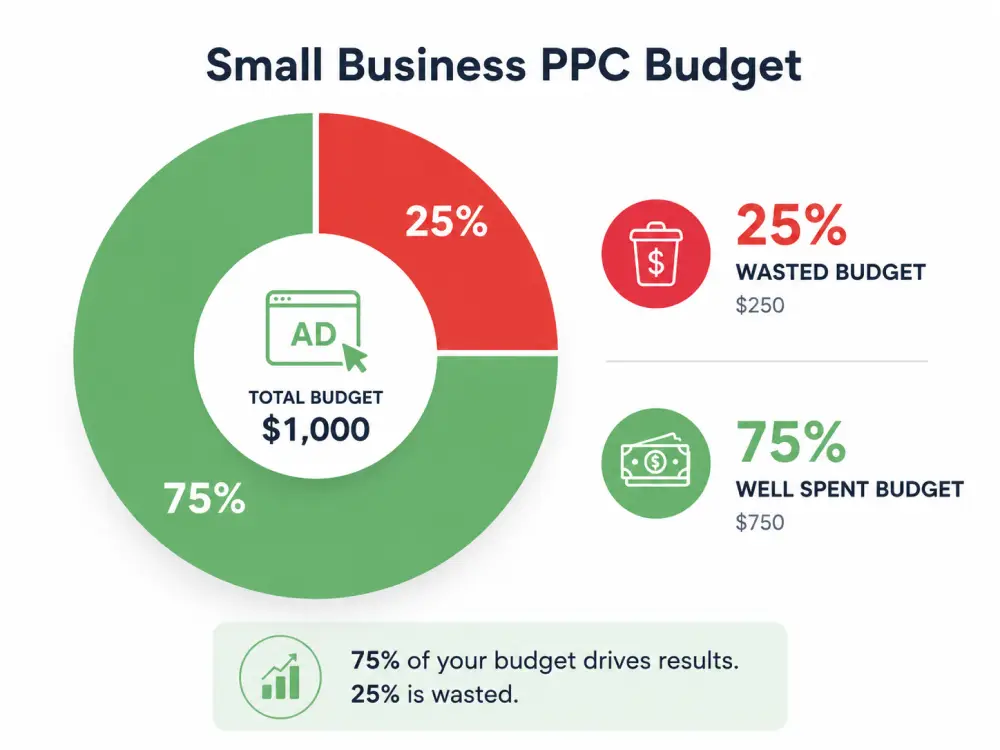
This isn’t a failure of advertising. It’s a failure of management. Research from WordStream found that small businesses waste roughly 25% of their PPC budgets due to strategic and managerial errors. That’s one out of every four dollars going straight into the void. And it’s happening because most small business owners don’t have the time, tools, or context to run ads the way they need to be run.
The “Set It and Forget It” Problem
The biggest source of wasted ad spend is inactivity. A WordStream study of 500 small business Google Ads accounts found that fewer than half had conversion tracking installed. That means more than half of those businesses were spending money on ads without any way to measure whether those ads generated a single lead, phone call, or sale.
It gets worse. 95% of those accounts didn’t have call extensions set up, even though many were running campaigns specifically designed to drive phone inquiries. They were paying for visibility but had no mechanism to capture the results.
This is the “set it and forget it” trap. You launch a campaign, get busy, and never come back to optimize it. Meanwhile, Google keeps spending your daily budget on keywords that may or may not be relevant, showing your ads to people who may or may not be your customers.
Paying for Clicks That Will Never Convert
Not all clicks are created equal. If you’re running broad match keywords without negative keyword lists, you’re paying for searches that have nothing to do with your business. A roofing company bidding on “roof” might get clicks from people searching for “roof rack for Toyota” or “rooftop bars near me.” Every one of those clicks costs money. None of them will ever become a customer.
The fix is straightforward but requires consistent attention. Review your search term reports every week. Add negative keywords to block irrelevant traffic. Tighten your match types so your ads show for the searches that actually indicate buying intent. This alone can save 15 to 20% of your monthly ad spend.
No Landing Page Strategy
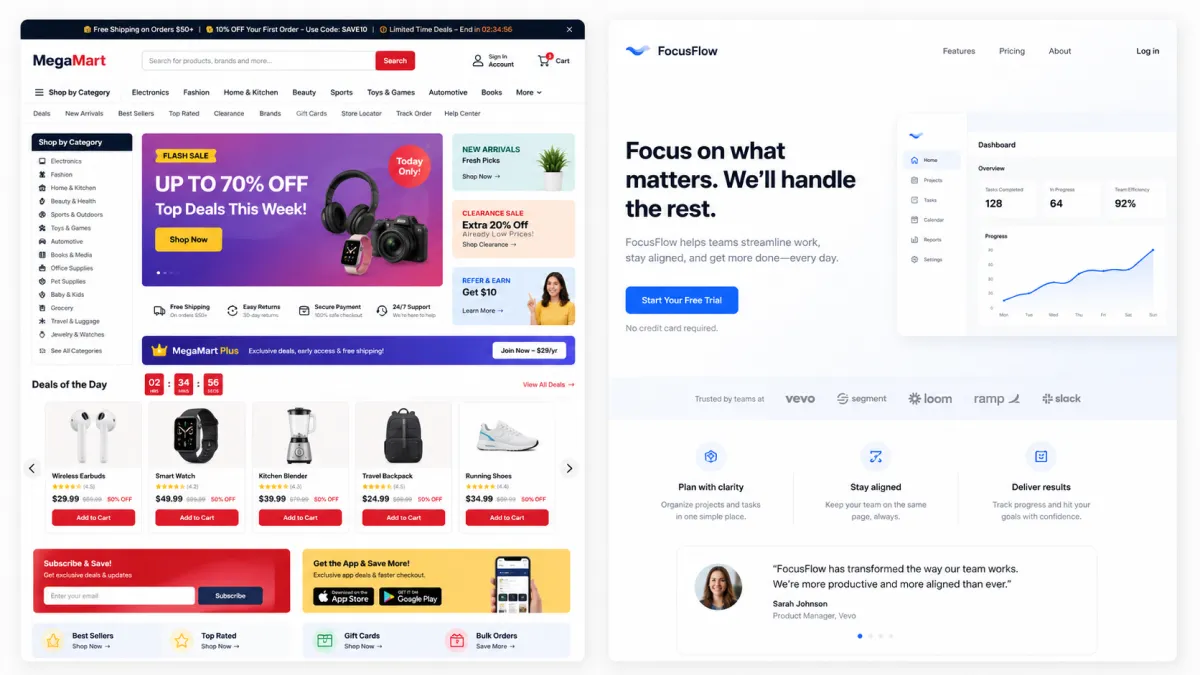
Here’s a scenario we see constantly: a small business runs a Google Ad for a specific service, and the ad clicks through to their homepage. The homepage talks about all 12 of their services, their company history, their team bios, and their mission statement. The visitor who clicked because they needed one specific thing now has to go hunting for it. Most of them don’t. They leave.
Every ad campaign needs a dedicated landing page that matches the search intent. If someone searches “emergency plumber in Dallas,” they should land on a page about emergency plumbing in Dallas with a phone number at the top, not a general homepage with a contact form buried at the bottom. The gap between the ad and the landing page is where most conversions die.
Ignoring the Data That’s Already There
Most ad platforms give you more data than you know what to do with. Click-through rates, cost per click, conversion rates, quality scores, impression share, device performance, time-of-day performance, and geographic breakdowns. All of it is available. Almost none of it gets used.
Small businesses that actively manage their ad accounts, even for just 30 minutes a week, dramatically outperform those that don’t. Look at which ads have the highest click-through rate and pause the ones that don’t perform. Check which times of day drive the most conversions and adjust your bid schedule. See which geographic areas convert best and focus your budget there.
The data tells you exactly where your money is working and where it’s being wasted. You just have to look.
How Much Should You Actually Be Spending?
The SBA recommends businesses with revenue under $5 million allocate 7 to 8% of gross revenue to marketing. For a business doing $500,000 a year, that’s $35,000 to $40,000 annually across all channels. The question isn’t just how much to spend. It’s how to spend it so every dollar is accountable.
Start with a budget you can actively manage. $500 a month managed well will outperform $2,000 a month left on autopilot. Track every lead. Know your cost per acquisition. Understand which campaigns drive revenue and which ones just drive traffic. Then scale the winners and cut the losers.
Stop the Bleeding, Start the Growth
Wasted ad spend isn’t inevitable. It’s the result of campaigns that aren’t being watched, pages that aren’t converting, and data that isn’t being used. Fix those three things and your existing budget will work harder than it ever has.
Building Brands Marketing manages paid ad campaigns for small businesses across Texas. We don’t set and forget. We build campaigns with conversion tracking from day one, landing pages built to convert, and weekly optimization baked into every account. If your ad spend feels like it’s disappearing, let’s find out where it’s going and fix it.
Frequently Asked Questions
How much of a small business ad budget is typically wasted?
Research shows small businesses waste approximately 25% of their PPC budgets due to lack of active management, missing conversion tracking, and poor keyword targeting.
What’s the biggest mistake small businesses make with Google Ads?
Setting up campaigns and never managing them. Over half of small business accounts lack conversion tracking, meaning they can’t measure whether ads generate leads or sales.
How can I reduce wasted ad spend?
Install conversion tracking, review search term reports weekly, add negative keywords, create dedicated landing pages for each campaign, and spend 30 minutes per week optimizing based on performance data.