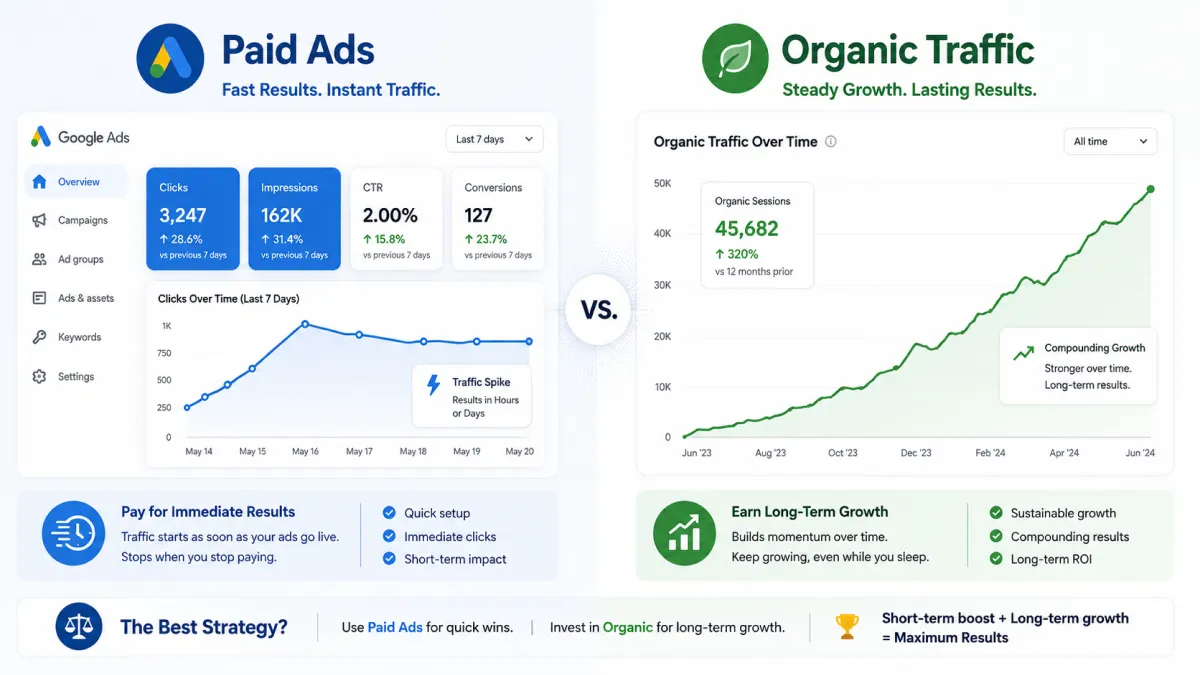
Every small business owner eventually faces this question: Should I pay for ads or invest in organic marketing? The honest answer is both. But the real question, the one that actually matters, is how to split your budget between the two so you get results now without sacrificing growth later.
Paid and organic aren’t competitors. They’re partners. But they play very different roles, and understanding those roles is the difference between a marketing budget that builds momentum and one that just burns cash.
What Paid Ads Do Well (and Where They Fall Short)
Paid ads, whether Google Search, Meta, or YouTube, do one thing exceptionally well: they put your business in front of people right now. You can launch a Google Ads campaign at 9 AM and have leads by noon. That speed is unmatched. For new businesses, seasonal pushes, or immediate revenue needs, paid ads are the fastest lever you can pull.
But speed comes at a cost. Literally. The moment you stop paying, the traffic stops. Paid ads rent attention. They don’t build equity. And the costs keep climbing. Research shows 86% of industries saw higher cost-per-click rates in 2024, with an average jump of about 10% year over year. That trend hasn’t reversed in 2026.
Paid ads also require constant management to avoid waste. As we’ve covered before, small businesses waste roughly 25% of their PPC budget when campaigns aren’t actively optimized. So the real cost of paid ads isn’t just the ad spend. It’s the ad spend plus the management time required to make that spend profitable.
What Organic Marketing Does Well (and Where It Falls Short)
Organic marketing, which includes SEO, content marketing, social media posting, and email, builds assets that compound over time. A blog post that ranks on Google today can generate leads for years. An email list you build this quarter keeps delivering value next quarter and the one after that. Organic creates owned traffic that doesn’t disappear when you pause the budget.
The downside? It’s slow. A new SEO strategy can take 4 to 8 months to show meaningful results. Content marketing requires consistency before the flywheel kicks in. Social media reach without paid amplification has been declining for years as platforms push businesses toward ad products.
Organic marketing is a long game. It builds the foundation your business stands on. But it won’t save you if you need 20 new clients by next Friday.
The Right Split Depends on Where You Are
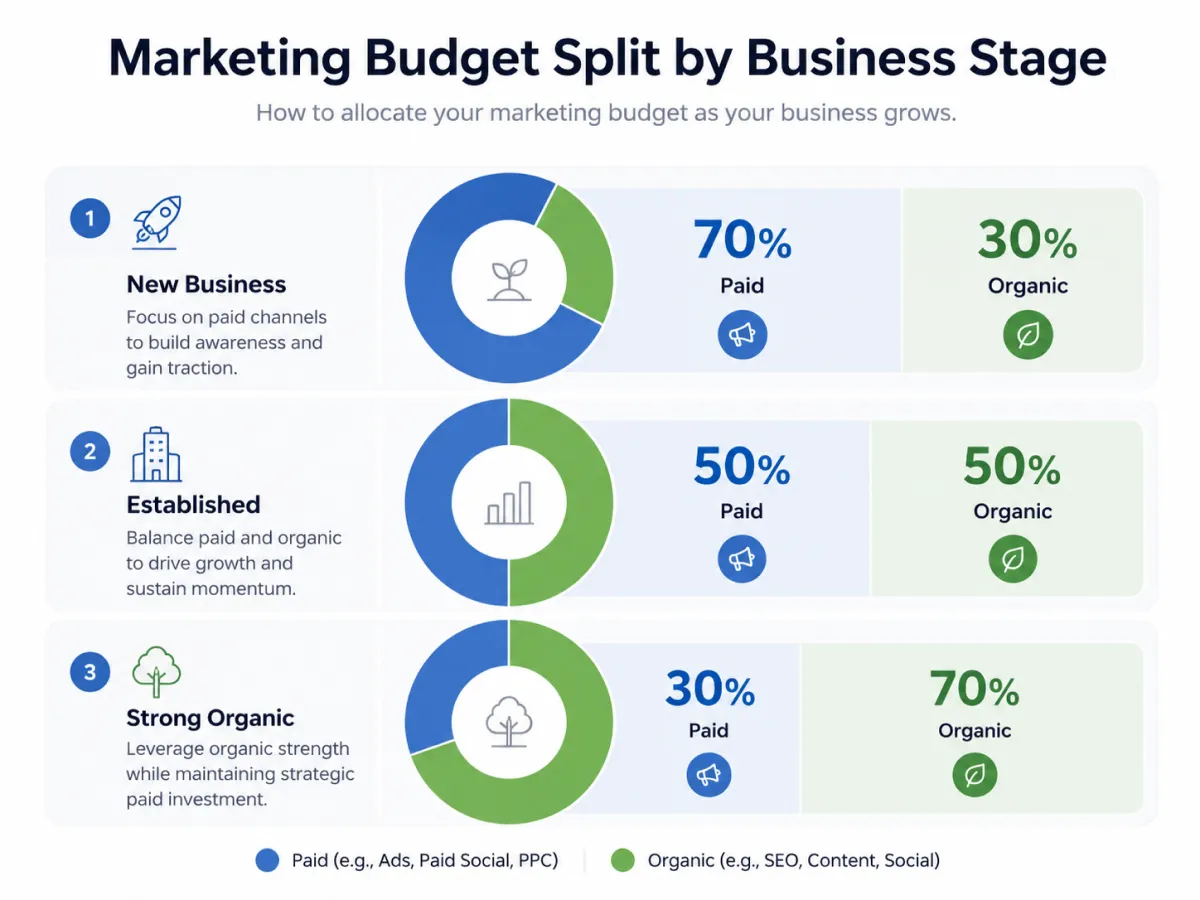
There’s no universal formula for how to divide your budget. But there’s a framework that works for most small businesses based on their growth stage.
New businesses (Year 1-2): Allocate 60-70% to paid, 30-40% to organic. You need clients now, and paid ads deliver speed. Use the organic budget to build your Google Business Profile, get your website SEO foundations in place, and start building an email list. These won’t pay off immediately, but they’ll pay off big later.
Established businesses (Year 3+): Shift to 40-50% paid, 50-60% organic. By now, your SEO should be generating traffic, your email list should be growing, and your reputation should be driving referrals. Paid ads shift from your primary growth engine to an amplifier that supplements your organic base.
Businesses with strong organic presence: Shift to 20-30% paid, 70-80% organic. If your SEO, content, and email are already driving consistent leads, paid ads become surgical tools for specific campaigns, new service launches, or geographic expansion rather than your lifeline.
How They Work Together
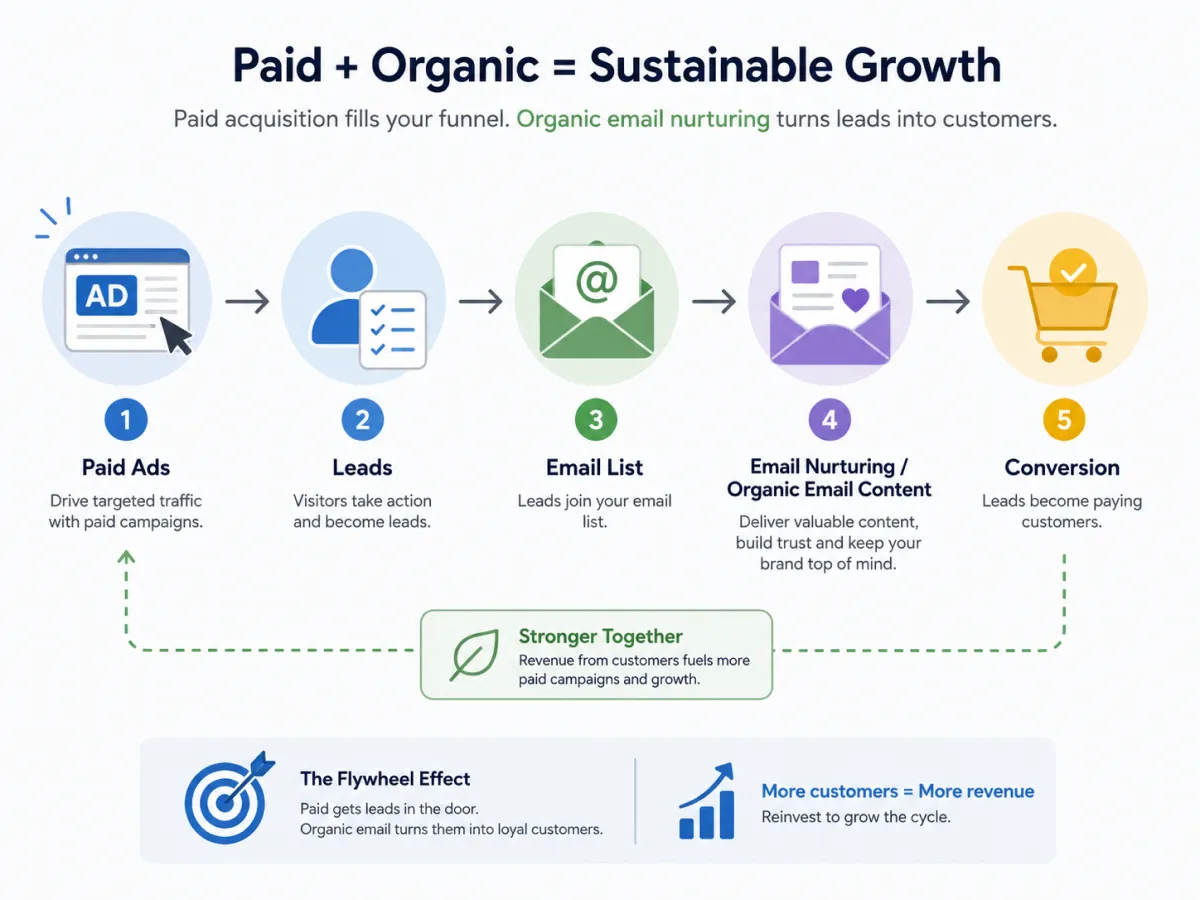
The best results come when paid and organic reinforce each other. Here’s what that looks like in practice:
Run paid ads to your highest-converting landing pages while simultaneously building SEO content around those same services. The paid ads generate immediate leads while the organic content gradually takes over, reducing your dependence on ad spend over time.
Use paid social ads to grow your email list, then nurture those subscribers with organic email content. The ad cost is a one-time acquisition expense. The email relationship delivers value for months or years.
Retarget website visitors with paid ads. Someone who found you through an organic Google search but didn’t convert sees your ad on Facebook the next day. The organic visit was free. The retargeting ad costs pennies. Together, they close the loop.
The Metric That Decides Everything
Whether you’re spending on paid or organic, one number should drive every decision: customer acquisition cost. How much does it cost you to acquire one paying customer through each channel? Track that number obsessively.
If Google Ads brings in a customer for $150 and your SEO content brings in a customer for $50, the math is clear. Invest more in organic. But if your organic pipeline takes 6 months to produce a lead and your paid pipeline delivers in 6 days, you might pay the premium for speed while organic catches up.
The right budget split isn’t about ideology. It’s about math. Run the numbers. Follow the results. Adjust quarterly.
Building Brands Marketing runs both paid and organic strategies for small businesses across Texas. We don’t believe in one-size-fits-all budget splits. We build plans based on where you are, what you need, and what the data says is working. If your marketing budget feels like it’s pulling in two directions, let’s get it aligned.
Frequently Asked Questions
Should small businesses spend more on paid ads or organic marketing?
It depends on your stage. New businesses should allocate 60-70% to paid for immediate results. Established businesses should shift toward 50-60% organic as SEO and content marketing compound over time.
What’s the difference between paid and organic marketing?
Paid ads rent attention and deliver immediate traffic that stops when you stop paying. Organic marketing builds owned assets like SEO content and email lists that generate leads continuously over time.
How do paid and organic marketing work together?
Paid ads generate immediate leads while organic content builds long-term traffic. Use paid ads to grow your email list, retarget organic visitors, and fill gaps while SEO content gains traction.