You’re getting traffic. People are visiting your website, clicking your ads, maybe even filling out a form. But they’re not becoming clients. The clicks are there. The revenue isn’t. That gap between a click and a client is your marketing funnel, and for most small businesses, it’s full of holes.
A marketing funnel isn’t complicated. It’s a system that takes someone from “I’ve never heard of you” to “Here’s my credit card.” The problem is that most small businesses are missing entire sections of that system. They’re great at generating awareness but terrible at converting it into revenue.
The Four Stages Every Funnel Needs
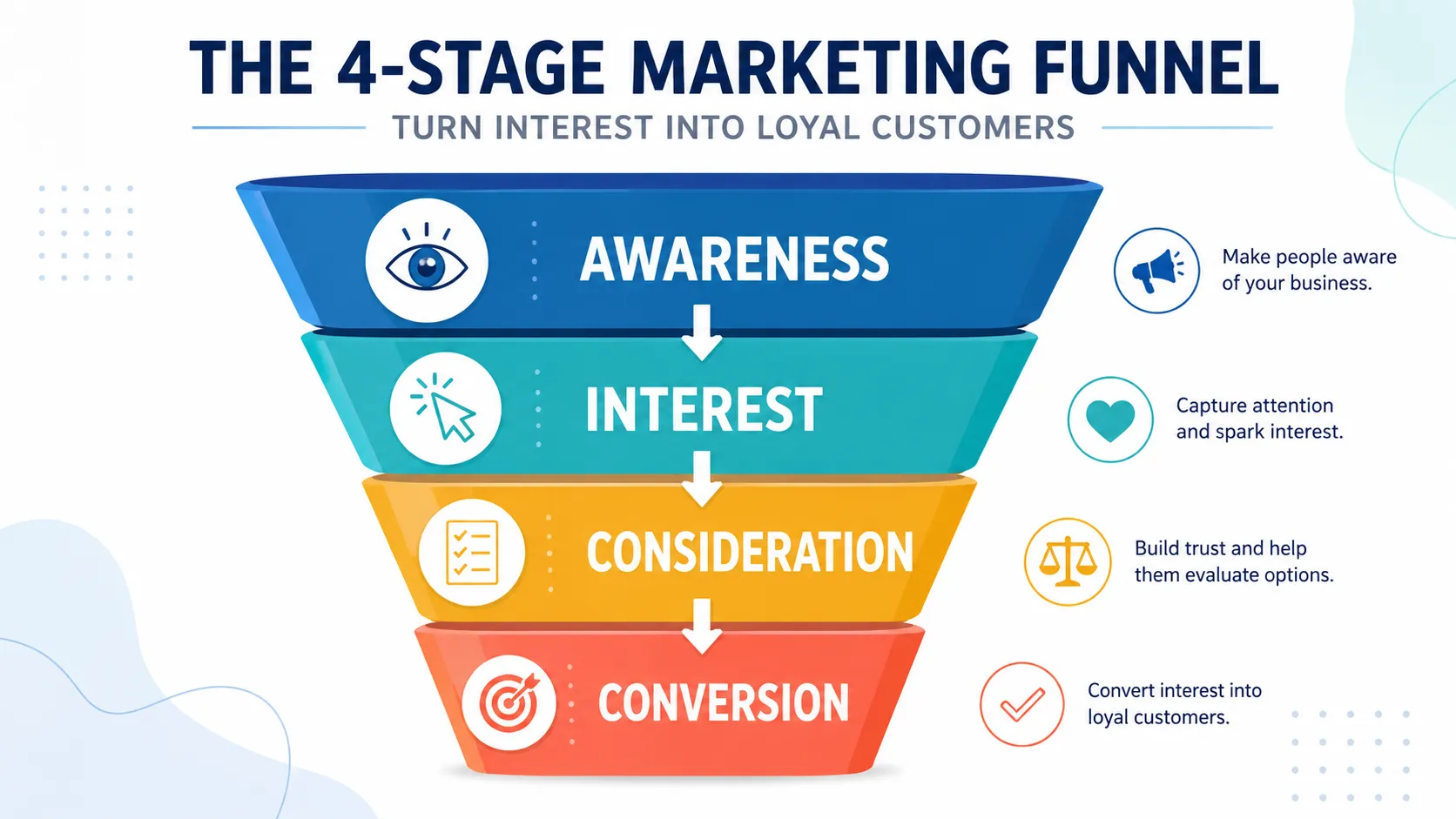
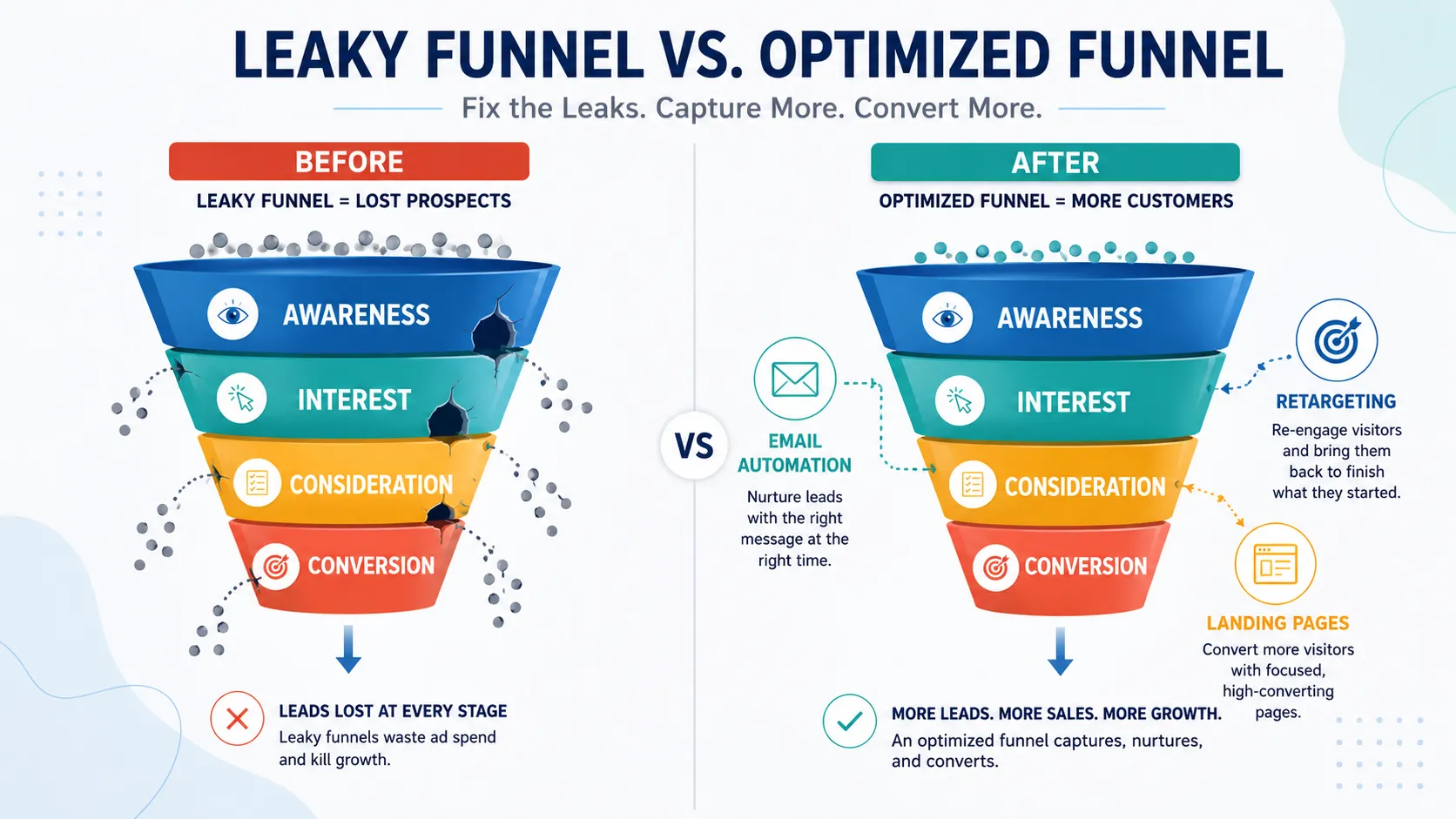
Every marketing funnel, regardless of industry, has four stages. Miss any one of them and the whole thing leaks.
Stage 1: Awareness. This is where someone first discovers your business. They click a Google Ad, find you in search results, see a social media post, or hear about you from a friend. The goal at this stage is simple: get noticed by the right people. Not everyone. The right people.
Stage 2: Interest. Now they’re on your website or your page. They’re looking around. They’re deciding whether you’re worth their time. The goal here is to give them a reason to stay. Clear messaging, proof you can deliver (reviews, case studies, results), and content that speaks directly to their problem.
Stage 3: Consideration. They’re interested but not ready to buy. Maybe they need to compare options. Maybe they need approval from a partner. Maybe they’re just not in a rush. The goal at this stage is to stay in front of them without being pushy. Email nurture sequences, retargeting ads, and helpful content keep you top of mind until they’re ready.
Stage 4: Conversion. They’re ready. The goal here is to make it as easy as possible to say yes. Clear pricing or next steps, a simple booking process, fast response times, and a human touch that makes them feel confident they’re making the right choice.
Where Most Small Business Funnels Break
Here’s what we see over and over: small businesses invest heavily in Stage 1 (awareness) and skip straight to Stage 4 (conversion). They run ads that send people to a contact page and wonder why nobody fills it out. They’re asking strangers to commit before they’ve earned any trust.
The middle of the funnel is where deals are won or lost. Research shows that 80% of marketing automation users see more leads generated, and 77% see more of those leads convert. That’s because automation handles the middle of the funnel, the follow-up, the nurturing, the staying in touch, that most small businesses do manually or not at all.
If someone visits your site and doesn’t convert, do you have a way to reach them again? If someone fills out a form, do they hear from you within 5 minutes or 5 days? If a lead goes cold, do you have a system to warm them back up? For most small businesses, the answer to all three questions is no. That’s the leak.
Building Your Funnel Step by Step
Step 1: Nail your landing page. One page. One service. One call to action. No distractions. This page should answer three questions in under 10 seconds: What do you do? Who do you do it for? How do I take the next step? Include social proof: reviews, client logos, and specific results you’ve delivered.
Step 2: Capture leads, not just clicks. Give visitors a reason to share their contact information. A free consultation, a downloadable guide, a quote calculator. Something valuable enough that they’ll exchange their email for it. Now you have permission to follow up.
Step 3: Automate the follow-up. When someone fills out a form, they should get an email within 5 minutes. Not a generic “thanks for reaching out” email. A useful email that addresses their likely questions and tells them exactly what happens next. Follow that with a 3 to 5 email sequence over the next two weeks that provides value and gently guides them toward a decision.
Step 4: Retarget the window shoppers. Install a tracking pixel on your website. Run retargeting ads to people who visited but didn’t convert. These are cheap, high-intent ads that keep your brand visible during the consideration phase. Average retargeting campaigns can boost conversions by 20% or more.
Step 5: Make conversion frictionless. When someone is ready to buy, don’t make them jump through hoops. Online booking, click-to-call buttons, simple forms, and fast response times. Every extra step between “I want this” and “I bought this” costs you clients.
The Funnel Never Stops
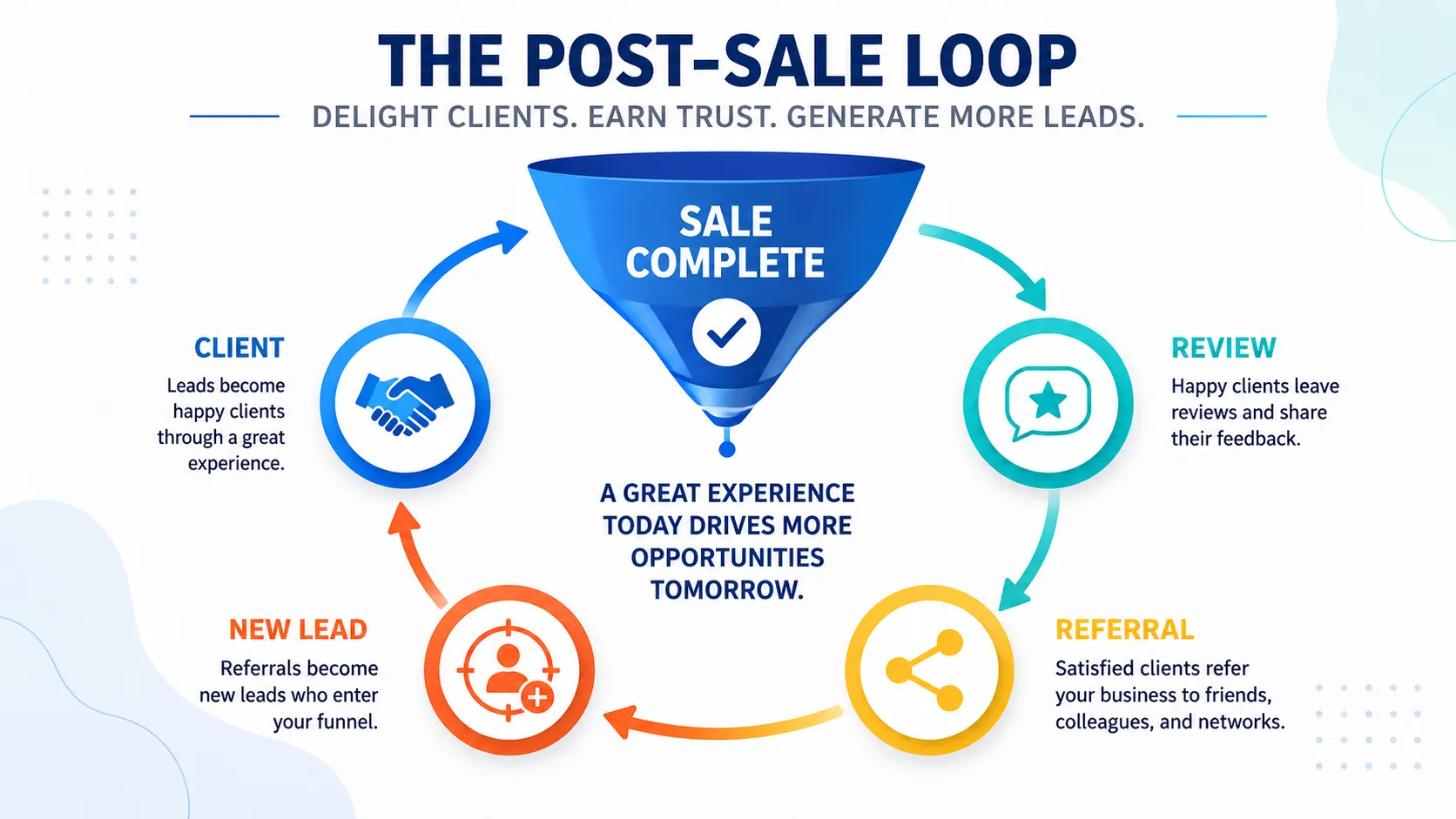
Most businesses think the funnel ends at the sale. It doesn’t. The best funnels loop back around. A happy client leaves a review (which feeds Stage 2 credibility). They refer a friend (which feeds Stage 1 awareness). They buy again (which feeds your bottom line with zero acquisition cost).
Build a follow-up process for existing clients. Check in after the project. Ask for a review. Offer a referral incentive. The cheapest lead you’ll ever get is one that comes from someone who already trusts you.
Building Brands Marketing builds full-funnel marketing systems for small businesses. Not just ads. Not just a website. The entire journey from click to client to repeat customer. If your marketing generates clicks but not revenue, the funnel is the fix. Let’s build yours.