A customer visits your website at 11 PM. They have a question about pricing. Your chatbot pops up and says: “Thanks for reaching out! A team member will get back to you during business hours.” The customer leaves. They find a competitor who answers the question immediately. You lost a sale while you were sleeping.
That’s the gap between a chatbot and an AI agent. And for small businesses, understanding the difference between AI agents vs chatbots is worth real money.
What a Chatbot Actually Does
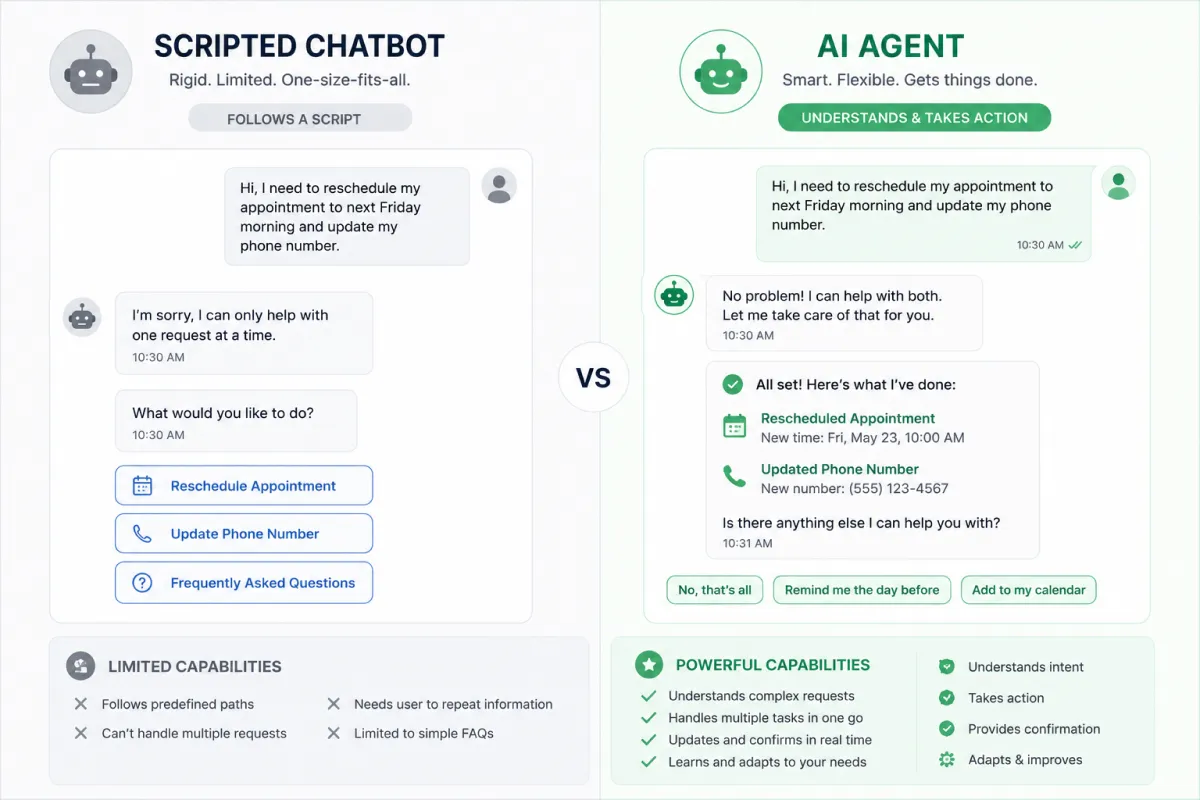
Traditional chatbots follow scripts. Someone asks “What are your hours?” and the chatbot matches that question to a pre-written answer. It works like a phone tree: press 1 for hours, press 2 for pricing, press 3 to talk to a human. If the question doesn’t match a script, the chatbot shrugs and offers to connect you with someone.
Most website chatbots in 2026 still operate this way. They’re better than nothing, but they don’t think. They match patterns to pre-loaded responses. Ask them something unexpected, and they fall apart.
What an AI Agent Actually Does
An AI agent is a chatbot that graduated college and got a job. Instead of matching patterns to scripts, an AI agent uses a large language model (like Claude or GPT) to understand context, reason through problems, and take real actions.
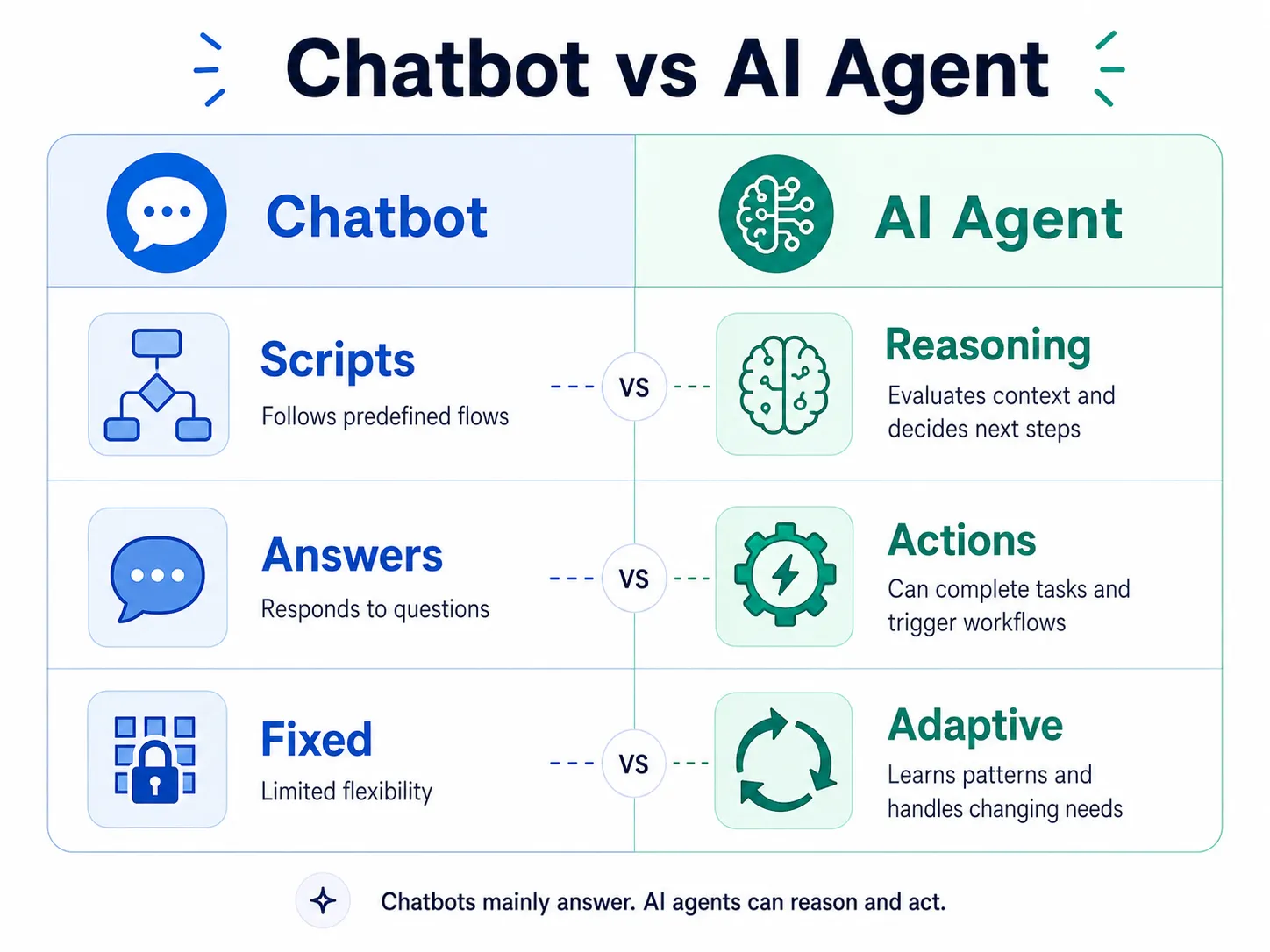
Here’s the key difference: a chatbot answers questions. An AI agent completes tasks.
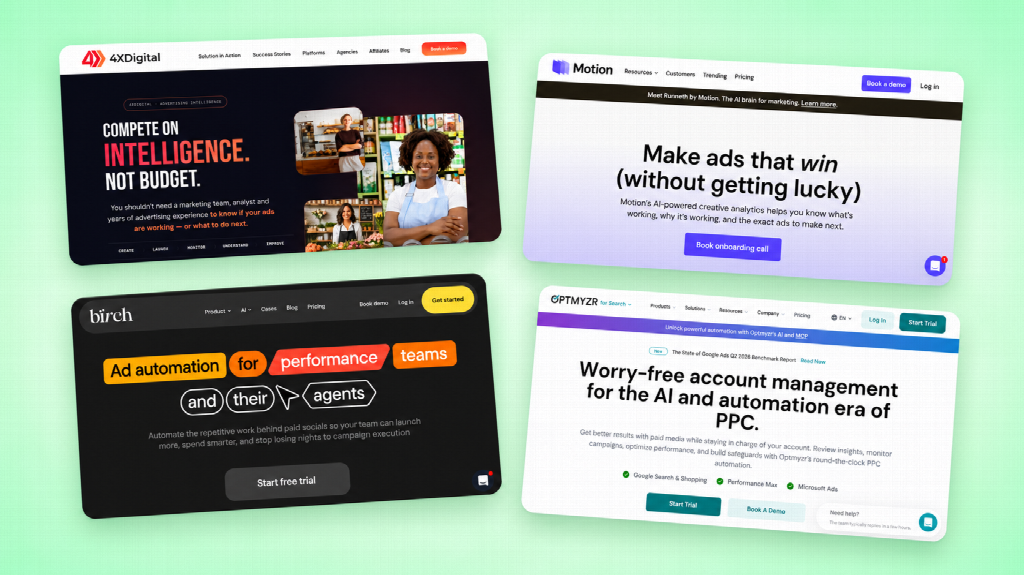
A chatbot tells you the store hours. An AI agent books your appointment, adds it to your calendar, sends you a confirmation email, and follows up the next day to ask how it went. That’s not science fiction. Tools like OpenClaw, Intercom’s Fin, and Tidio’s Lyro are doing this right now.
Where Chatbots Still Make Sense
Chatbots aren’t dead. For simple, high-volume questions that never change, a scripted chatbot is fast, cheap, and reliable. If 80% of your customer inquiries are “What time do you close?” and “Where are you located?”, a basic chatbot handles that just fine.
Rule-based chatbots also give you complete control over responses. There’s zero risk of the bot saying something unexpected or off-brand. For industries with strict compliance requirements (healthcare, finance, legal), that predictability matters.
Where AI Agents Pull Ahead
AI agents shine when questions get complicated or when you need the bot to do something, not just say something.
Customer support that resolves issues. Intercom’s Fin charges $0.99 per resolution, and it can process refunds, update orders, and troubleshoot problems without a human touching the ticket.
Lead qualification that happens automatically. An AI agent can ask follow-up questions, assess fit, and route qualified leads to your sales team with context already attached.
Scheduling and follow-ups. An agent can book meetings, send reminders, reschedule, and handle the back-and-forth that eats hours of your team’s week.
Personalized recommendations. AI agents remember context. If a returning customer asks about a product, the agent can reference their purchase history and make relevant suggestions.
The Cost Question Small Businesses Ask
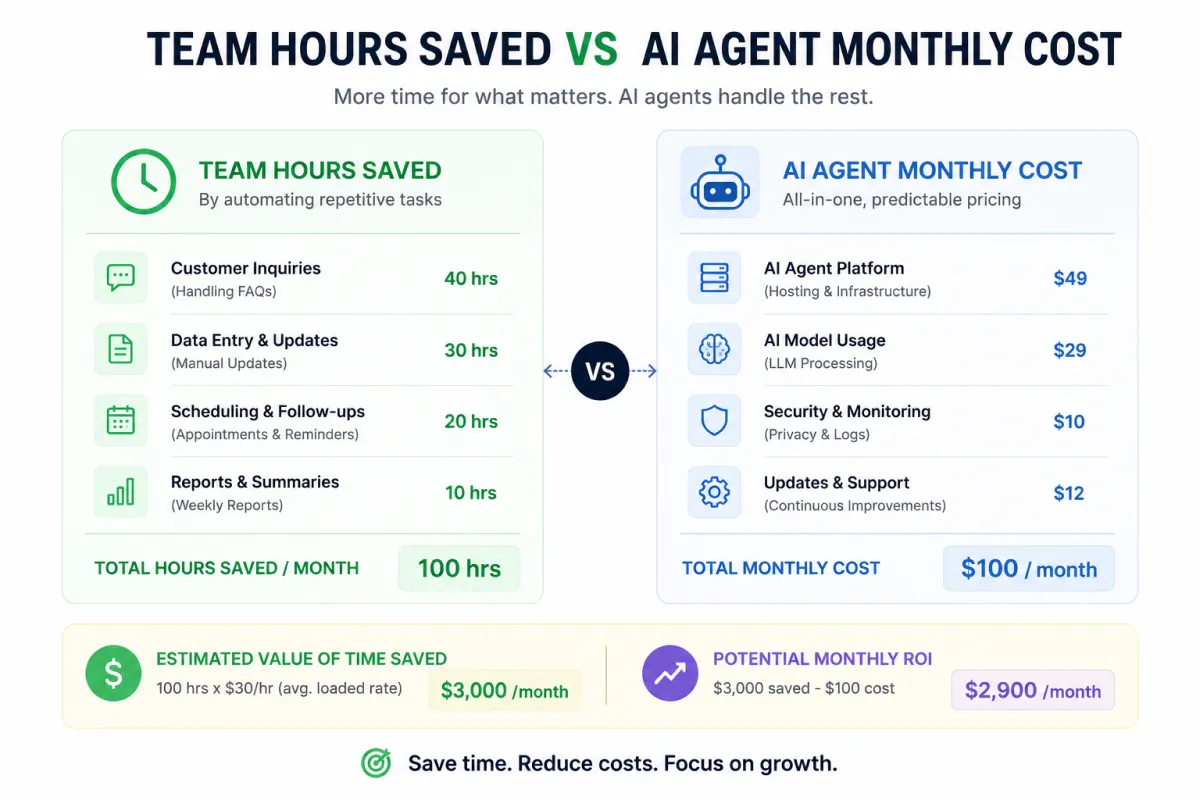
Here’s where it gets interesting. Basic chatbots are often free or cheap. AI agents cost more because they’re powered by language models that charge per interaction. But the math usually favors agents when you factor in the cost of lost leads and employee hours.
Let’s say your team spends 10 hours a week answering routine customer questions. At $25/hour, that’s $1,000 a month. An AI agent that handles 70% of those questions might cost $200-$400 a month in API fees. The savings are obvious, and your team gets 7 hours back to focus on revenue-generating work.
Which One Should You Pick?
If your customer questions are simple, predictable, and high-volume, start with a chatbot. Tidio’s free plan and HubSpot’s chat widget are solid starting points that cost nothing.
If your customers ask varied questions, need real-time problem solving, or you want the bot to take actions (booking, emailing, updating records), invest in an AI agent. The upfront setup takes more time, but the return is measurable.
And here’s the thing most articles won’t tell you: you can use both. A scripted chatbot handles the FAQ layer, and an AI agent steps in for anything complex. That hybrid approach gives you the best of both worlds.
Not sure which approach fits your business?
Building Brands Marketing helps small businesses pick, set up, and optimize AI-powered customer interactions. We’ll match the tool to your goals and your budget. Let’s chat.
Frequently Asked Questions
What is the difference between a chatbot and an AI agent?
A chatbot follows pre-written scripts and matches questions to fixed responses. An AI agent uses a language model to understand context, reason through problems, and take real actions like booking appointments or processing refunds.
Should a small business use a chatbot or an AI agent?
It depends on your needs. Simple, repetitive questions work well with chatbots. Complex inquiries requiring real-time problem solving or task completion benefit from AI agents. Many businesses use both in a hybrid approach.
How much does an AI agent cost for a small business?
AI agent costs vary. Some charge per resolution (like $0.99 per ticket), while others charge monthly API fees ranging from $200 to $400 depending on volume. Most businesses see positive ROI within the first month compared to employee time costs.