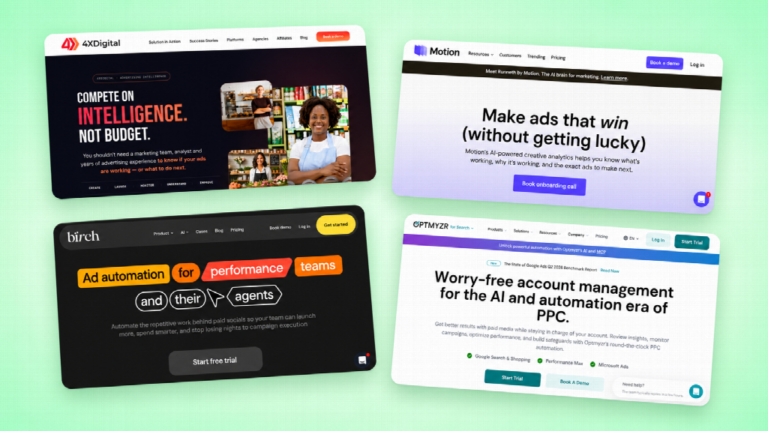
Madgicx alternatives have been coming up quite a lot in the conversations I’m having with SMBs, particularly as they expand their advertising campaigns and assess the software in their stacks.
In a lot of cases, the people I’ve spoken with are enjoying Madgicx’s optimization features, which are AI-powered.
I think Madgicx has a pretty compelling proposition if you’re running Facebook and Instagram ads.
I can see the value in Madgicx’s campaign insights and how they would inevitably make managing a Meta account a lot less time-consuming.
SMBs are just interested in knowing what else might be out there.
I’ve spent years working around paid acquisition and from my conversations with SMBs, I found that most of them are looking for more help with bigger decisions.
And what I mean by that is looking at paid advertising campaigns across multiple channels and trying to work out how they all fit together.
Because you are probably running Meta campaigns alongside things like Google Ads and even TikTok now.
You can spend a ridiculous amount of time looking at all of that data and trying to piece it together like a jigsaw puzzle.
Most teams seem to end up with a stack of tools that show a fragmented picture.
The last thing that anyone needs right now is another dashboard.
With that in mind, I want to put forward solutions that can answer questions about your campaigns.
For instance, if your ROAS has moved, you’re probably thinking, “What should I do next?”
Much of the time, a dashboard isn’t going to have an answer for you.
Then you’ll end up tweaking the campaign and making a load of unnecessary changes.
It all becomes a bit of a mess when you’re not making informed decisions around your campaigns.
Why Most Alternatives To Madgicx Feel So Similar
I think we should just be honest in saying that making big decisions around paid advertising is tough.
A lot of SMBs start getting frustrated when they see dashboards of data, but they don’t know how to interpret any of it.
We know that Madgicx gives you plenty of tools to investigate performance and optimize campaigns.
This is why I think it’s a strong option for Meta-focused advertisers.
But let’s say you’re running a Meta campaign and your ROAS drops by, say, 18% over the course of a week.
What happens if you’re also running Google Ads and you’re trying to decide where the next $2,000 should go?
You’ll need to compare those numbers.
You might have one platform showing your Meta performance and then another breaking down what’s happening on Google.
And this is the problem.
SMBs have tools to manage campaigns, but they lack the insights needed to make informed decisions.
They need solutions that explain what’s going on with a campaign and why.
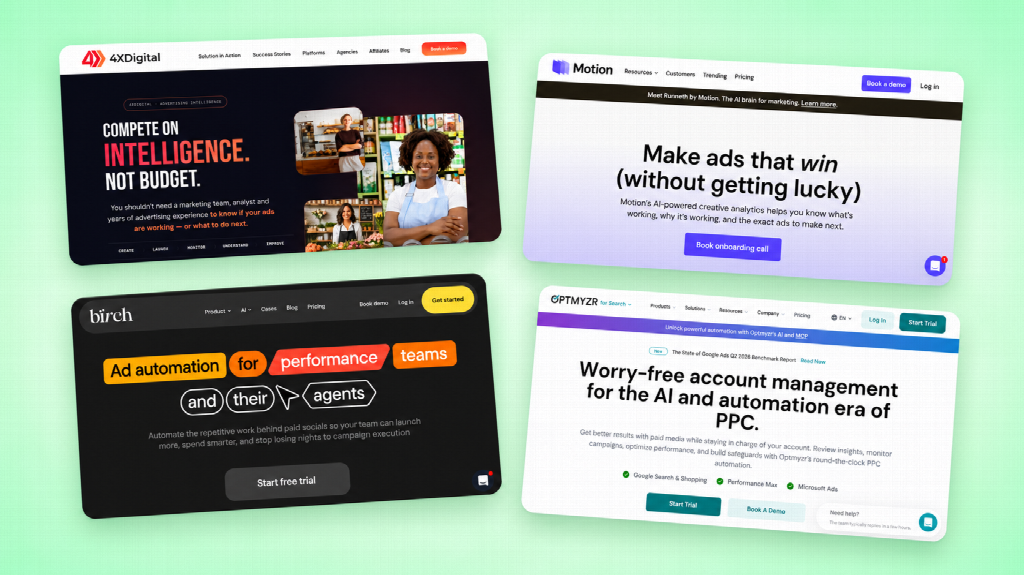
The Best Madgicx Alternatives I’d Look At
You’ll obviously need to book a few demos and test these platforms out before settling on a solution.
Not every Madgicx alternative will be a good fit for your business.
I want you to think about why you’re leaving Madgicx in the first place.
For some, it might be about finding a tool that offers better campaign creation and automation, while others are more interested in unlocking creative insights that lead to better decision-making.
Hopefully, I can save you a bit of time and point you toward the platforms answering different needs.
1 – 4XDigital
I like 4XDigital because it’s focused on the “why” behind your advertising campaigns.
The platform is designed to help small businesses not just create and launch advertising across Meta, Google, and TikTok, but also understand where budgets are going and whether they should be doing something differently.
The reality is, if you’re a small business owner spending money across a lot of different channels, you certainly do not have time to be giving up your evenings trying to piece together what’s happening across three different advertising accounts.
4XDigital brings together Business Memory, Collective Intelligence, and AI into what it calls Advertising Intelligence.
Business Memory is what your account has already learned about your campaigns.
It remembers what happened with ads in the past, as well as context about the business itself.
Collective Intelligence is the part that tells you if what you’re seeing is normal.
This brings in patterns from thousands of other advertising decisions, so you have more context when looking at what’s happening in your own campaigns.
I really like the idea of your advertising history becoming more useful over time, because a lot of SMBs end up having to rediscover the same lessons every few months.
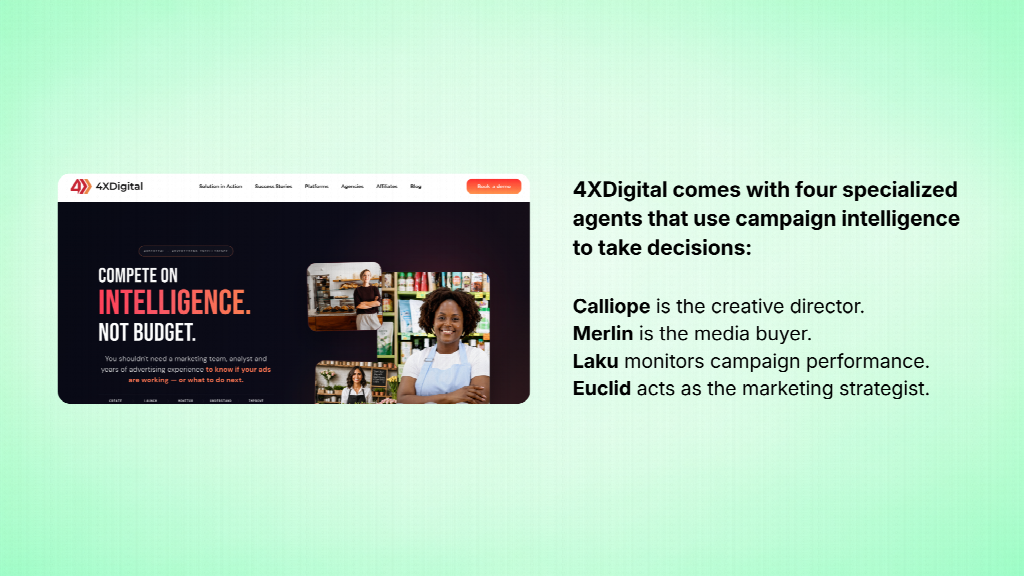
That Advertising Intelligence is then used by four specialized agents:
- Calliope is the creative director.
- Merlin is the media buyer.
- Laku monitors campaign performance.
- Euclid acts as the marketing strategist.
If we think about a small business owner opening up their advertising account and seeing that CPM has suddenly risen.
They will obviously feel a massive temptation to start tweaking things immediately and begin playing around with all of their ad settings.
A higher CPM tells them something has changed, but not whether they should change the creative, audience, or budget, or whether they should really leave the campaign alone.
The four AI agents are using Advertising Intelligence to create, launch, monitor, understand, and improve campaigns, which is a much more interesting proposition to an SMB than adding another reporting dashboard to their stack.
I’ve dug out some of their case studies for you.
BR Collaborative went from having no digital presence to 27X ROAS in 90 days and 24.6% AOV growth.
Hooves & Paws saw 10.73X ROAS and more than 26,000 people reached in 30 days while scaling Meta and Google campaigns.
What makes Hooves & Paws interesting is that the growth wasn’t coming from one channel alone. 4XDigital was managing campaigns across both Meta and Google, giving the business a clearer view of how its advertising was performing across the two.
Choice Air is another one I find interesting because their problem was around spending money without really knowing if the advertising was working.
Their case study reports more than $7,800 in revenue from a little over $200 in ad spend.
Cedarstone School of Music reported a 56% reduction in cost per result alongside a 71% increase in reach over 30 days.
It goes without saying that not every business will get those numbers.
But it’s pretty cool that these aren’t major enterprise brands with big teams.
This makes me think that 4XDigital could be an attractive option for SMBs.
Book a demo for this one at the very least.
2 – Birch
I think it’s a particularly good fit for advertisers who already know their way around paid media.
Birch, formerly Revealbot, is one I’d look at if automation is the main reason you’re thinking about leaving Madgicx.
The platform gives you the ability to create rules that take action when certain campaign conditions are met.
This is obviously very useful when it comes to managing several accounts. No small business owner I know wants to spend their entire day checking the same metrics.
For example, you might want to automate decisions around:
- Pausing campaigns when performance crosses a threshold.
- Adjusting budgets when specific conditions are met.
The thing I’d be careful about is how much responsibility you’re handing over to those rules.
A rule can automatically respond to a condition, but it still depends on someone deciding what that rule should be in the first place!
If you’ve got a good understanding of your account, you can build automation that saves you a lot of time.
If you’re still trying to work out which metrics matter, I’d be more cautious.
For a small business owner who wants help interpreting performance, there might be other platforms to look at first.
But I’d consider Birch a strong Madgicx alternative if you’re an experienced media buyer who wants a bit more control over campaign automation.
I’ve seen advertisers get themselves into a bit of a mess by making too many changes too quickly and automation can get you tangled in knots faster if the rules aren’t sensible.
3 – Motion
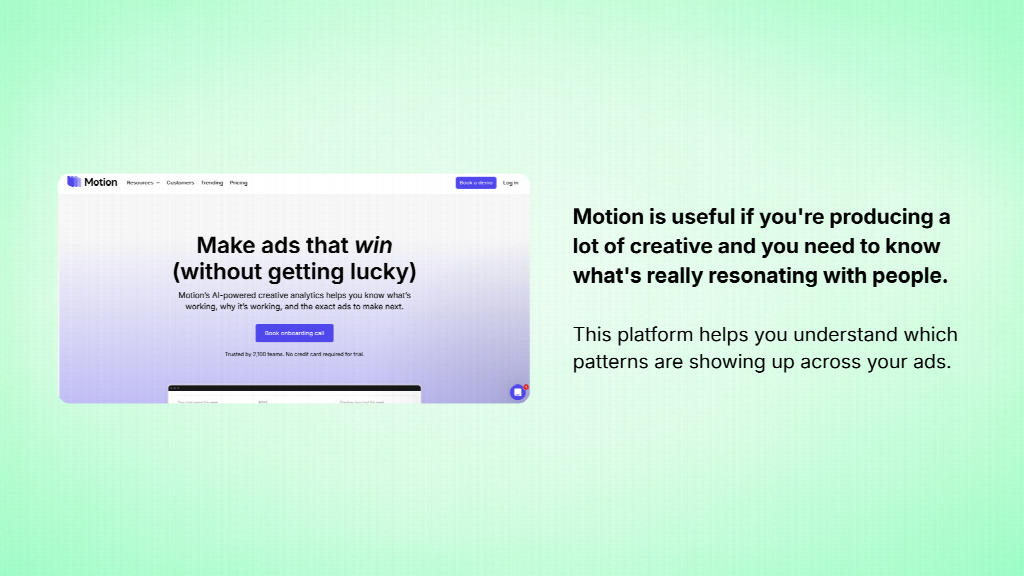
Motion is useful if you’re producing a lot of creative and you need to know what’s really resonating with people.
The platform is a slightly different proposition compared to the other two that I’ve already covered, but I think it still deserves a place on this list because creative performance is such a big part of paid advertising, as you know.
We’ve all seen situations where ads suddenly stop getting the same response as they once did, despite a sensible campaign structure and a good audience.
What Motion does is give you more visibility into creative performance.
So this platform helps you understand which patterns are showing up across your ads.
I think it’s a very interesting tool to investigate when creative is the main thing holding your account back.
I wouldn’t use it as a complete replacement for Madgicx if I needed campaign automation and broader media management.
4 – Optmyzr
I can see Optmyzr being good for an agency or a business with someone who already understands Google Ads.
This is really the one to look at if Google Ads is becoming a much bigger part of your advertising strategy.
Optmyzr comes with tools for automation and reporting that help experienced advertisers work more efficiently.
If I’m honest, if you’re trying to bring Meta, Google and TikTok into one connected decision-making process, I’d probably want to see how Optmyzr fits alongside the rest of your stack.
This platform is really built around paid search management and optimization.
The thing I’d think about is how much of your advertising is happening outside that search-focused environment.
Optmyzr is a sensible Madgicx alternative to investigate if Google Ads is where you’re spending most of your money.
5 – Smartly.io
Smartly makes a lot of sense when you’ve got a serious media budget and a team that can make use of this platform’s capabilities.
Because it can really do a lot.
It’s built around creative and media management across multiple channels.
So you’re getting automation and optimization capabilities that are really built around teams managing substantial advertising activity.
One of the traps that I see SMBs fall into is getting carried away by the feature lists of enterprise platforms.
For a business spending $3,000 to $5,000 a month, I think this is potentially an expensive way to manage advertising.
And on that basis, I’d be much more inclined to recommend it to a larger brand than an SMB that’s looking for a simpler way to manage its campaigns.
6 – AdStellar
I think the question to ask here is: how much of your time is spent getting campaigns ready to launch?
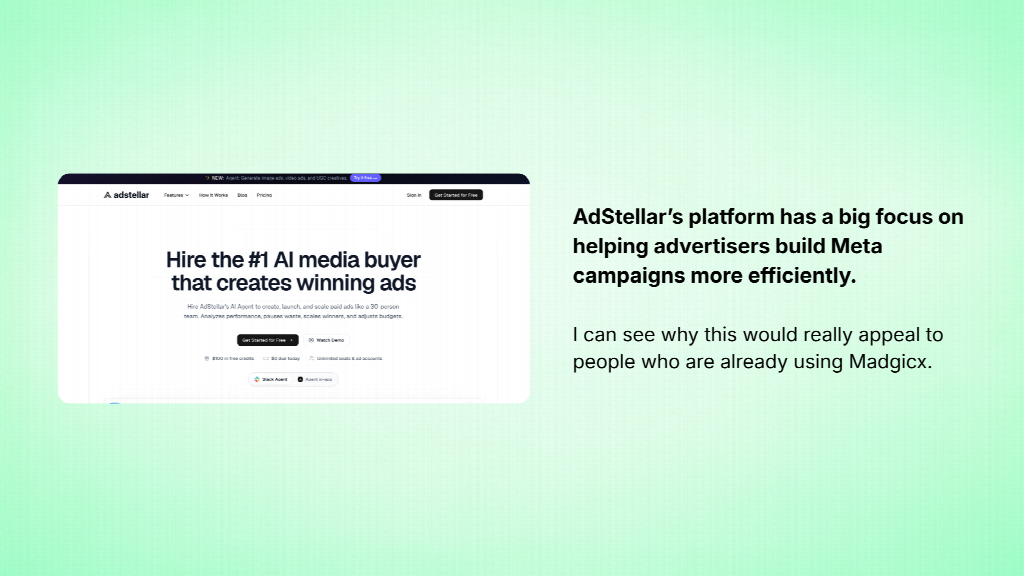
AdStellar’s platform has a big focus on helping advertisers build Meta campaigns more efficiently.
I can see why this would really appeal to people who are already using Madgicx.
I’d want to see how that AI takes care of my own account before making a decision, though.
Because if you’re constantly building new ads and testing different approaches, having software that can help speed all of that up could obviously be very useful.
I think you should investigate how it decides which campaigns should be created in the first place, or at least that’s the question I bring to the demo.
For broader advertising intelligence, I’d be looking at 4XDigital.
7 – AdEspresso
When it comes to campaign creation and split testing, AdEspresso has been around as an option for a very long time and it’s an obvious one to consider if you’re looking for something a little more straightforward.
I can see the appeal if you’ve been using Madgicx and feel as though you’re paying for capabilities you don’t really use.
AdEspresso can make sense for that type of advertiser.
The thing I’d think about is why you’re moving away from Madgicx in the first place.
I’m not convinced AdEspresso is going to solve the problem of providing you with more sophisticated intelligence around your advertising decisions.
But if you’re looking for a simpler, Meta-focused workflow, I’d certainly include it in your research.
8 – Adzooma
I like the general direction of Adzooma because it’s built to make advertising easier and provide recommendations without expecting every user to become a professional media buyer.
Once your campaigns become more complicated, I’d start asking whether the platform gives you enough depth to understand what’s driving performance.
That’s the question I’d bring into the demo.
I’d probably recommend Adzooma to someone who wants a more approachable way to manage their advertising.
You might be running the business during the day and checking your advertising in the evening, so having software that points you toward potential improvements will inevitably save you some time.
9 – Meta Ads Manager
There’s a lot to work through inside Ads Manager, especially when you’re trying to run a relatively simple campaign.
But I think Meta Ads Manager deserves a place here because you may find that you don’t need another platform at all.
And from my own experience, some parts of the interface have become considerably easier to use over time.
I’m not running dozens of creative variations in every campaign, but setting up a few straightforward tests has become much less painful than it used to be.
If you’re looking for Madgicx alternatives because you want more help making decisions, I’d still be looking at one of the other platforms on this list.
Meta Ads Manager is a good place to start if you’re comfortable doing everything yourself.
I find that all of the terminology and settings can be overwhelming when you’re starting out. So I understand why people look for alternatives.
Avoid Madgicx Alternatives That Just Offer More Reporting
It’s my biggest gripe with advertising software in general at the moment.
Plenty of dashboards tell me what happened to a campaign, though I’m way more interested in what the numbers mean for my next decision.
This is immensely frustrating for SMBs who want to move fast and overcome bottlenecks quickly.
4XDigital’s approach involves using previous campaign history and wider advertising patterns to inform decision-making.
So when I’m looking at Madgicx alternatives, I want to know how much context the platform can bring into the decisions being made.
A recommendation becomes much more useful (and I’m more likely to take action) when I can understand the reasoning behind it.
And that’s especially important when there’s real money on the line.
Where To Start With Madgicx Alternatives
If you’re already comfortable with paid media and want a bit more automation, I’d look at Birch.
If the bigger problem is that you’re spending money across several channels, but you’re not really sure what the results mean or what you should be doing next, I’d book a demo with 4XDigital and investigate that one first.
The best thing you can do is go onto the call with a specific question about your campaign.
Here are some ideas…
“Why did my CPA increase?”
“Which channel should get my next $2,000?”
“How would you know when not to make a change?”
I’d want to know how 4XDigital can handle questions like that and what reasoning is behind each recommendation.
If you’re mainly looking for a simpler Meta advertising workflow, AdEspresso and Meta Ads Manager are sensible places to begin.
Before you book your demo, start with the problem you need to solve, then choose the platform that best solves it.