When you have a $50,000 marketing budget, you can experiment. You can test three different channels, run brand awareness campaigns, and absorb a few failures while you figure out what works. When you have $500 a month, you can’t. Every dollar has to pull its weight from day one.
That’s the reality for most small businesses. And it’s exactly why most small business marketing fails. Not because the tactics are wrong, but because there’s no strategy connecting them to actual revenue. A strategy-first approach changes everything. It’s not about doing more marketing. It’s about doing the right marketing, measured by results, not activity.
Start With the Number, Not the Channel
Most small businesses pick a marketing channel first. “We should be on Instagram.” “We need to run Google Ads.” “Let’s start a blog.” Then they spend money on that channel and hope something happens.
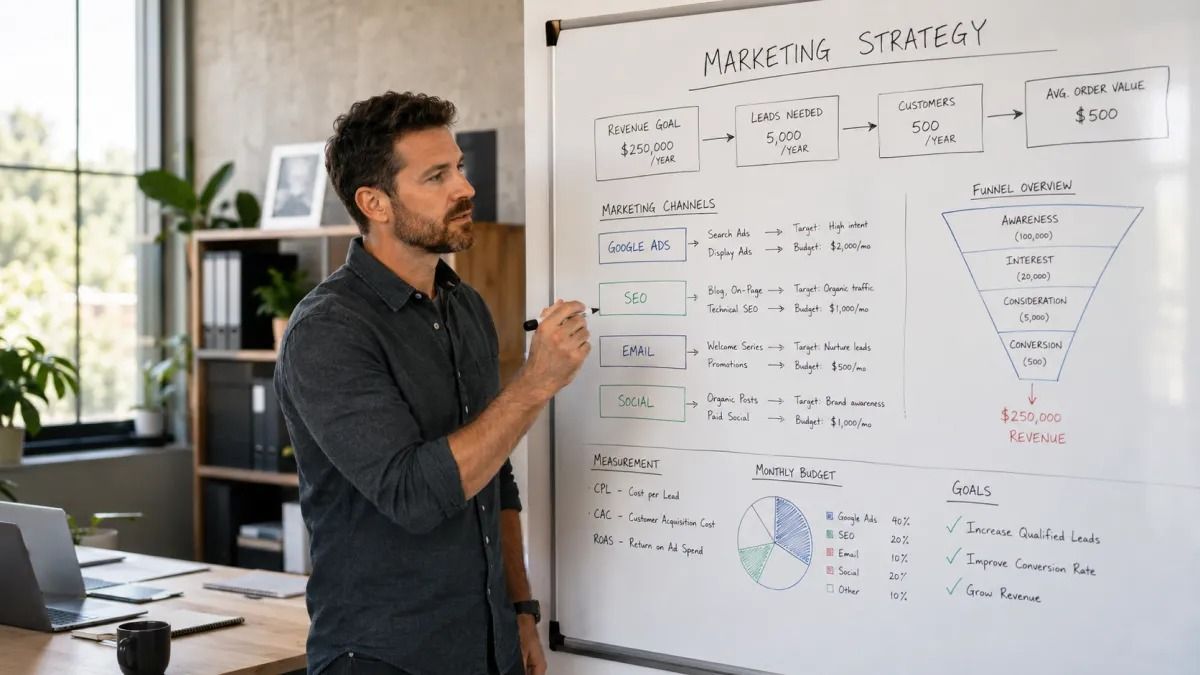
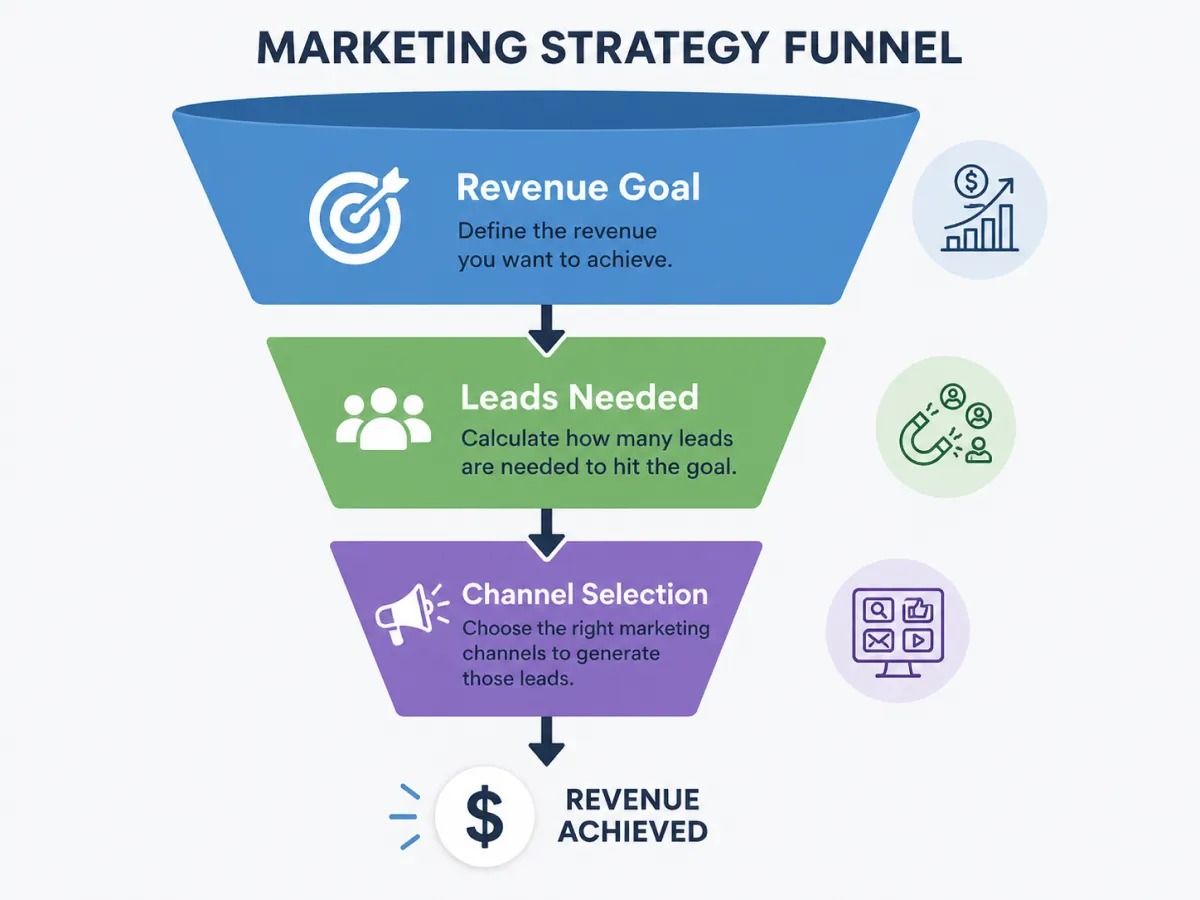
Flip it. Start with the number you need to hit. How many new customers do you need this month to grow? What’s each customer worth over their lifetime? How many leads does it take to close one customer? Work backward from revenue to leads to traffic. Now you know exactly what your marketing needs to produce, and you can choose channels based on which ones can deliver those numbers at a cost you can afford.
For example: if you need 10 new clients this month, your close rate is 25%, and your average cost per lead is $30, you need 40 leads at a total spend of $1,200. That math tells you whether your budget can support the goal, and which channels are realistic.
Pick Two Channels and Go Deep
Small businesses spread themselves thin across every platform because they think visibility equals results. It doesn’t. Being mediocre on six platforms produces less than being excellent on two.
For most local service businesses, the two highest-ROI channels in 2026 are Google Search (paid and organic) and email marketing. Google captures people actively searching for what you sell. Email nurtures the people who aren’t ready to buy yet. Together, they cover the full buyer journey from “I need this” to “I’m ready to hire.”
If you’re a B2C business with a visual product, swap email for Instagram or TikTok. If you’re B2B, swap social for LinkedIn. The point is: pick the two channels that match your audience and your offer, then invest enough time and budget to actually win on those platforms.
Build a System, Not a Campaign
Campaigns end. Systems run continuously. The difference matters more than most business owners realize.
A campaign is: “Let’s run ads for two weeks and see what happens.” A system is: “Every lead from Google Ads hits a landing page, fills out a form, gets an automated follow-up email within 5 minutes, enters a nurture sequence, and gets a call from our team within 24 hours.” The campaign generates interest. The system converts it into revenue.
Most small businesses have the campaign part figured out. They’re running ads, posting on social, sending the occasional email. What they’re missing is the system that connects those activities to actual sales. Build the follow-up. Build the nurture sequence. Build the tracking. Then turn on the traffic.
Measure What Matters, Ignore What Doesn’t
Likes don’t pay rent. Impressions don’t close deals. The only metrics that matter for a small business are: How many leads did we generate? What did each lead cost? How many became paying customers? What’s our return on ad spend?
Everything else is noise. Social media engagement is nice. Website traffic is interesting. But if you can’t trace a marketing dollar to a revenue dollar, you’re guessing. And guessing is exactly what you can’t afford.
Set up conversion tracking on every campaign. Use a CRM (even a free one like HubSpot) to track leads from first touch to closed deal. Review your numbers weekly. Double down on what’s working. Cut what isn’t. This simple discipline separates businesses that grow from businesses that spend.
The 30-Day Quick Start
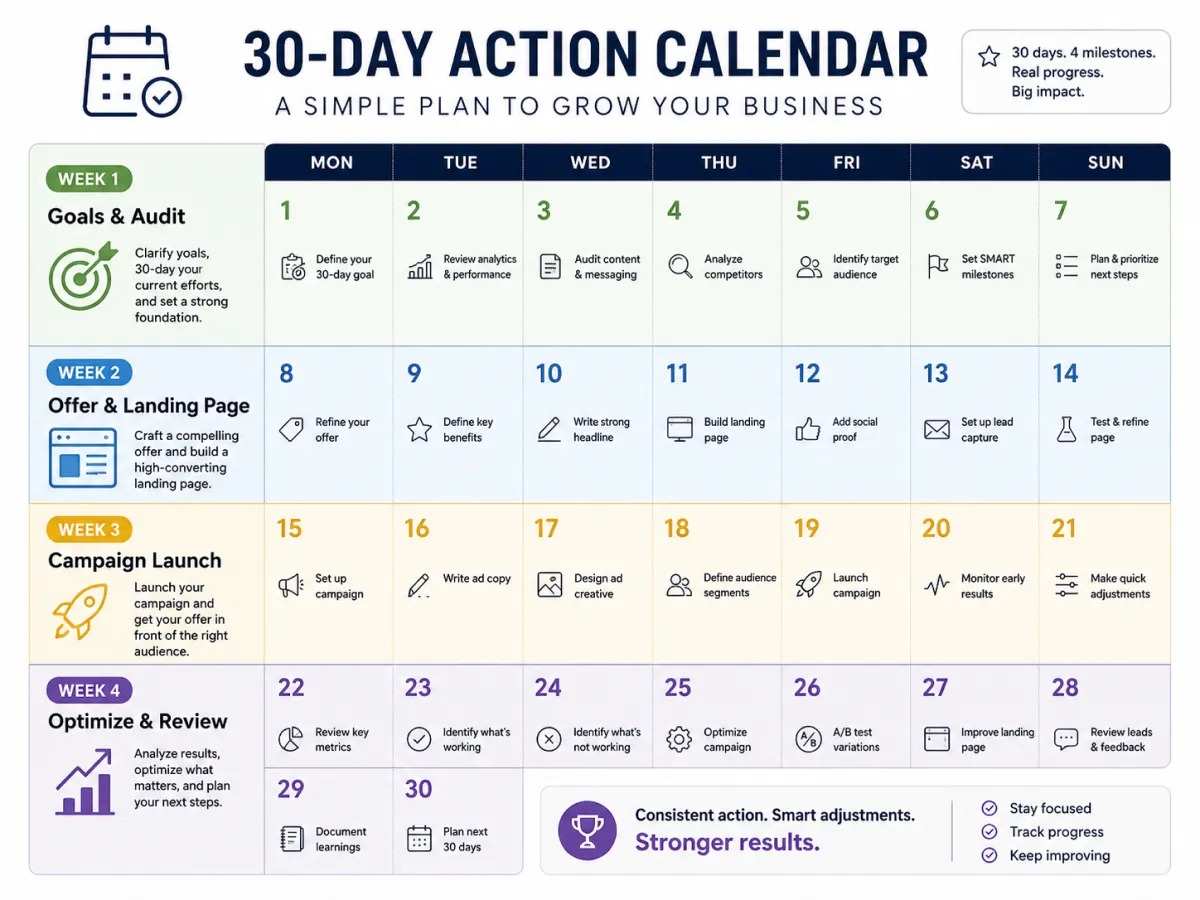
If you’re starting from scratch or resetting a strategy that isn’t working, here’s a 30-day framework:
Week 1: Define your revenue goal, calculate leads needed, and audit what’s currently working. Kill anything that isn’t producing measurable results.
Week 2: Choose your two primary channels. Set up conversion tracking and a basic CRM. Build or improve your landing page for your highest-value service.
Week 3: Launch your first campaign with a modest budget. Start a weekly email to your existing contact list. Every email should include one clear call to action.
Week 4: Review your data. What’s the cost per lead? Which ads or posts drove conversions? Adjust your budget toward what’s performing and cut what isn’t.
After 30 days, you’ll have more clarity about your marketing than most businesses get in a year. From there, it’s optimization and scaling.
Building Brands Marketing builds strategies for small businesses that can’t afford to waste a dollar. We start with your revenue goal, build backward to the tactics that’ll get you there, and track every result. No fluff. No guessing. Let’s build a plan that actually works.