
For the first year of Building Brands Marketing, our Monday mornings were chaos. Everybody showed up, we talked about whatever was on fire, someone mentioned a deadline nobody else knew about, and we left the meeting more confused than when we walked in. An hour wasted. Every single week.
Then we built a meeting structure. One format. 30 minutes. Same flow every Monday. And it changed everything about how our team communicates, prioritizes, and delivers work for our clients.
Here’s exactly how we run it, step by step.
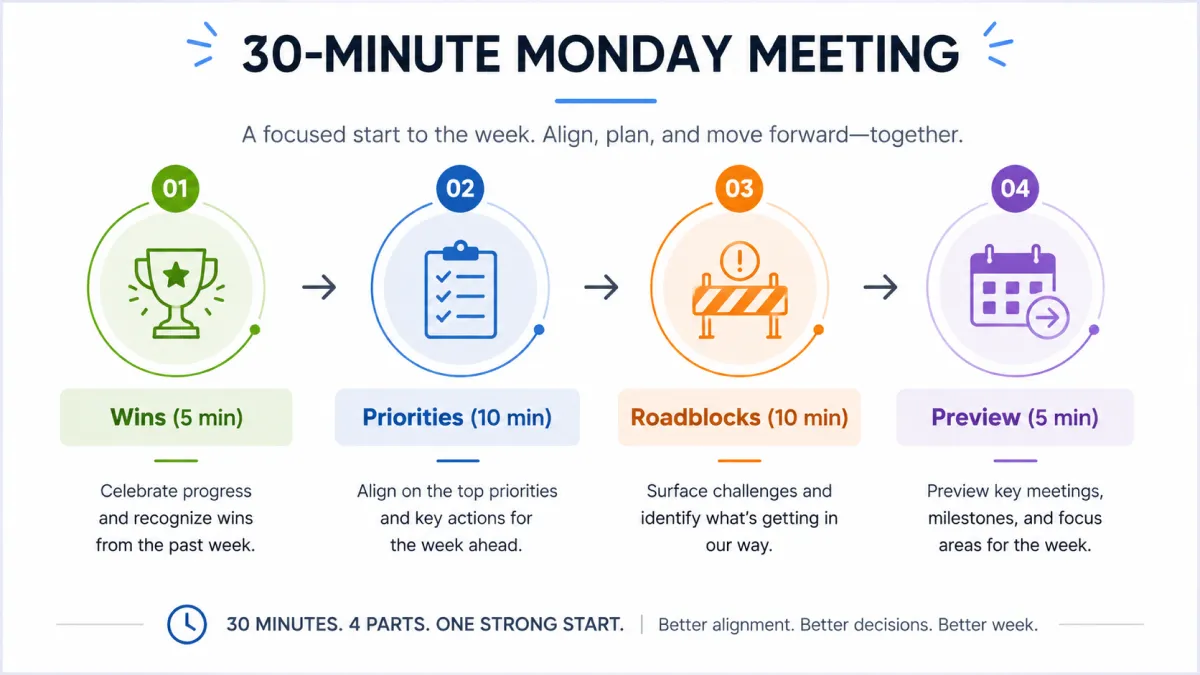
The 5-Minute Wins Round
We start every Monday meeting by going around the room and sharing one win from the previous week. It can be a client result, a personal accomplishment, or something a teammate did that stood out. Everyone shares. Nobody skips.
This does two things. First, it starts the week on a positive note instead of diving straight into problems. Second, it surfaces wins that the team might not have seen. When your social media specialist hears that a campaign they supported led to a closed deal, they feel the impact of their work. Context creates connection.
Five minutes. That’s all it takes. But it sets the tone for everything that follows.
The 10-Minute Priority Review
Next, each team member shares their top three priorities for the week. Not their full task list. Not every email they need to respond to. Three things that, if completed, would make this a successful week.
This eliminates two common problems. First, it prevents people from burying themselves in low-impact busy work. When you have to say your top three priorities out loud to the team, you quickly realize that “reorganize the file system” probably isn’t one of them. Second, it surfaces conflicts. If two people are depending on the same deliverable, or if someone’s priority doesn’t align with a client deadline, the team catches it in real time instead of on Thursday at 4 PM.
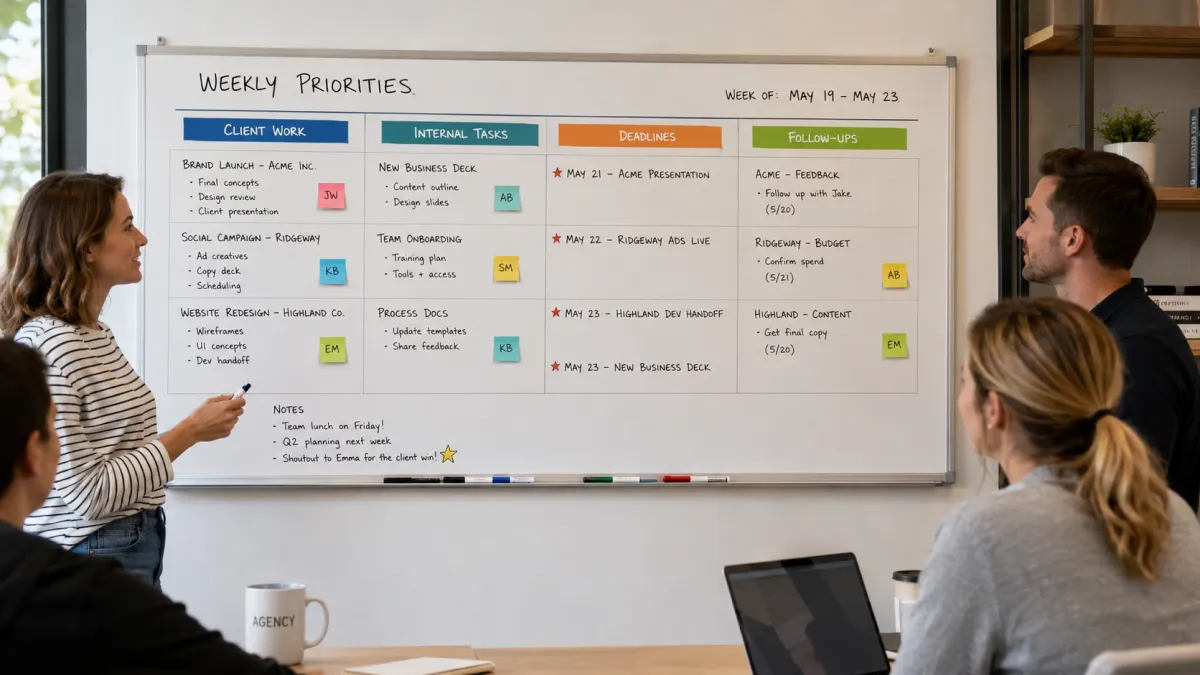
We write these down on a shared board. They stay visible all week. Accountability without micromanagement.
The 10-Minute Roadblock Check
After priorities, we ask one question: “What’s in your way?” Not “do you have any issues” because the answer to that is always “nope.” We ask specifically: “What’s the one thing that could slow down your top priority this week?”
This is where the real value shows up. Maybe someone is waiting on a client approval. Maybe a tool isn’t working. Maybe they need 30 minutes of someone else’s time to review something. These are small blockers that, if left unaddressed, turn into missed deadlines and frustration.
We assign every roadblock an owner and a resolution deadline right there in the meeting. Nothing leaves the room unaddressed.
The 5-Minute Upcoming Week Preview
We close with a quick look ahead. Any client meetings, deadlines, or milestones in the next 7 to 14 days that the full team should know about. This prevents surprises and gives everyone a sense of what’s coming so they can plan accordingly.
We also flag any upcoming capacity issues here. If someone has a packed week and a new project is landing, we redistribute before it becomes a bottleneck instead of after.
What This Meeting Replaced
Before this structure, we had long, unstructured meetings that covered everything and resolved nothing. We had separate one-on-ones to cover what should have been discussed as a team. We had Slack threads that went in circles because nobody knew who owned what.
This one 30-minute meeting replaced all of it. The team walks in, gets aligned, identifies problems, and walks out with a clear plan. Every week. Same format. No surprises.
Why 30 Minutes Is the Ceiling
Meetings expand to fill the time you give them. Give a meeting an hour and you’ll use an hour, even if you only need 25 minutes. Capping our Monday meeting at 30 minutes forces discipline. It forces people to be concise. It forces the team to prioritize what actually matters instead of discussing every minor detail.
If something needs a deeper dive, we schedule a separate conversation. The Monday meeting is for alignment, not problem-solving. That distinction is everything.
This meeting structure is one piece of how Building Brands Marketing delivers consistent results for our clients. If your team feels scattered, your deadlines keep slipping, or your meetings feel like wasted time, let’s talk about building systems that actually work. We do it for our clients’ marketing and for our own operations.