
You spent $5,000 on a new website last year. It looks great. Loads fast. Has all your services listed. And it’s getting outperformed by a free Google listing that took 20 minutes to set up.
That’s not a knock on your website. It’s just how local search works now. Your Google Business Profile is the first thing customers see when they search for local services. It’s what Google’s AI pulls from when answering local questions. It’s what voice assistants reference when someone asks “Who’s the best electrician near me?” And for most local businesses, it drives more calls, directions, and leads than the website does.
Google Business Profile Is Now Your Digital Storefront
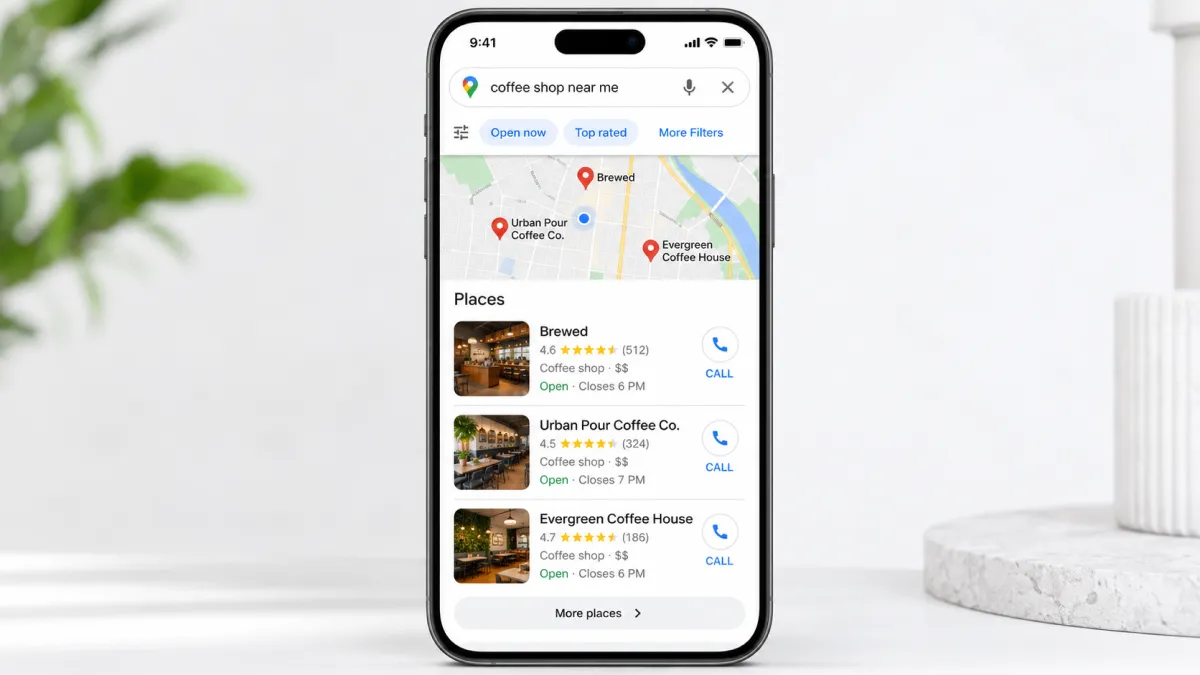
When someone searches for a local service on their phone (and 81% of local AI Overview searches happen on mobile), Google shows the Map Pack before anything else. Three businesses. Photos, ratings, hours, phone numbers, and a click-to-call button. Most people never scroll past it.
Your Google Business Profile is what populates that Map Pack. It’s also what feeds Google’s AI Overviews for local queries, what Gemini references when making local recommendations, and what Siri pulls from when answering voice questions about nearby businesses. In 2026, your GBP isn’t just a listing. It’s a database that AI systems across multiple platforms use to decide who gets recommended.
The Algorithm Shift: Engagement Over Authority
Google’s local search algorithm recalibrated this year in a way that matters for small businesses. The traditional model ranked businesses based on relevance, distance, and prominence (brand authority, backlinks, domain strength). Prominence still matters, but Google now weighs real-world engagement signals more heavily.
What does that mean? A newer business generating consistent reviews, regular GBP posts, photo uploads, and customer interactions can now outrank an established competitor with a stronger website but a neglected profile. Google is measuring activity, not just authority.
This is good news for small businesses. You don’t need a massive website with hundreds of backlinks to rank locally. You need a Google Business Profile that’s complete, accurate, active, and earning real engagement.
What a Fully Optimized Profile Looks Like
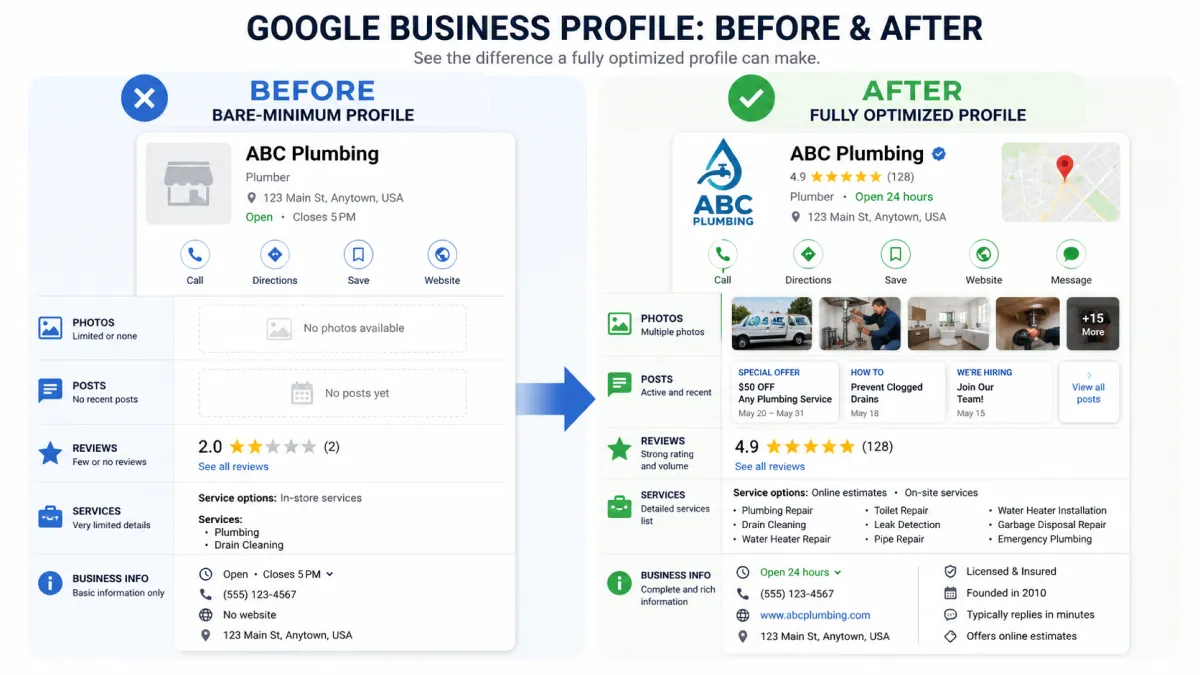
Most business owners fill in their name, address, phone number, and hours, then forget about it. That’s like building a storefront with no sign, no window display, and the lights off. Here’s what a profile that actually ranks looks like:
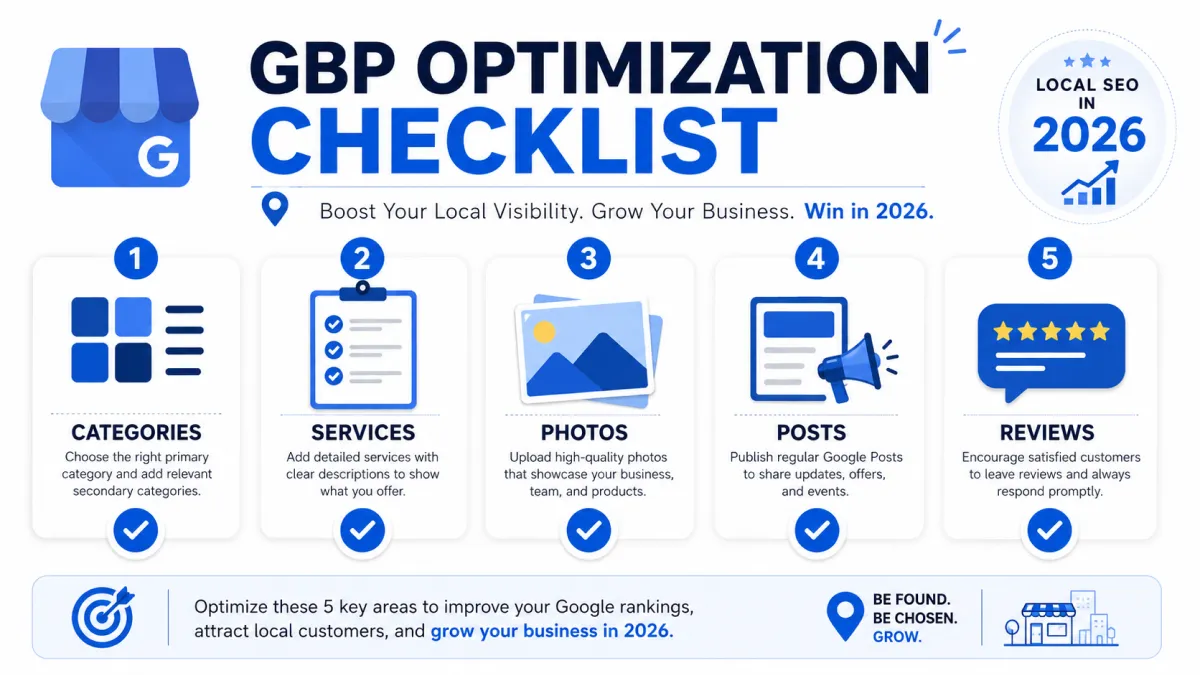
Every category and attribute selected. Don’t just pick your primary category. Add every secondary category that applies. Fill in attributes like “women-owned,” “wheelchair accessible,” or “free estimates.” These help AI systems match your business to specific queries.
Service descriptions with real detail. Don’t just list “AC Repair.” Describe it: “AC repair for residential and commercial systems including refrigerant recharge, compressor replacement, thermostat diagnostics, and emergency same-day service.” AI systems need specificity to recommend you confidently.
Photos updated monthly. Businesses with recent photos get more clicks, more calls, and more direction requests. Upload project photos, team photos, and before-and-after shots. Google’s AI checks photo metadata for recency.
GBP posts every week. Google Business Profile posts are free. Use them to share updates, promotions, tips, and service highlights. Active profiles signal to Google that the business is operating and engaged.
Review responses on every single review. Responding to reviews, both positive and negative, signals trustworthiness. Google’s AI analyzes review sentiment and response patterns when deciding which businesses to recommend.
Reviews Are Now an AI Ranking Signal
This deserves its own section. Reviews have always influenced local rankings, but in 2026, AI systems are parsing review content, not just counting stars. Google’s AI can read a review that says “They replaced our water heater in 3 hours, showed up on time, and cleaned up after” and connect that to a query about fast water heater replacement.
Volume matters. Recency matters. And the actual words in the reviews matter. Encourage customers to mention the specific service they received, the location, and what stood out. Those details make your reviews machine-readable in a way that generic “Great service!” reviews simply can’t match.
Your Website and GBP Are a Team, Not Competitors
This isn’t about choosing one over the other. Your website builds depth, authority, and trust. Your GBP provides clarity, immediacy, and AI-readable data. They work together. Your GBP should link to a dedicated location page on your website (not your homepage). That page should include unique local content, team information, and service details specific to that location.
In an AI-driven search environment, clarity wins. And right now, your Google Business Profile delivers clarity faster than anything else.
Building Brands Marketing optimizes Google Business Profiles that drive real calls and real leads. We’ll audit your current profile, fix gaps, and build a posting and review strategy that keeps your business visible in the Map Pack and AI recommendations. Let’s get to work.
Frequently Asked Questions
Is a Google Business Profile more effective than a website for local search?
For local Map Pack rankings and AI-assisted local recommendations, GBP often drives more calls and leads than the website alone. Both work together, but GBP provides the immediacy and structured data AI systems rely on.
How often should I update my Google Business Profile?
Post at least weekly, upload new photos monthly, respond to every review within 24 to 48 hours, and audit your categories and service descriptions quarterly to keep your profile active and accurate.
Do Google reviews affect AI search recommendations?
Yes. In 2026, Google’s AI parses review content, not just star ratings. Reviews that mention specific services, locations, and experiences help AI systems match your business to relevant queries.