

The resume looked perfect. Five years of experience. All the right software skills. A portfolio that checked every box. You made the hire. And within three months, the team dynamic shifted. Communication got tense. Collaboration stalled. The work was technically fine but the energy was off.
Most small business owners have lived this scenario. And most of them made the same mistake: they hired for credentials and forgot to evaluate character. In a small team, one person’s attitude affects everyone. The right skills paired with the wrong character creates more problems than it solves.
Why Character Outweighs Skills in Small Teams
In a 50-person company, you can absorb a difficult personality. There are enough buffers, departments, and layers of management to dilute the impact. In a 5-person team, there’s nowhere to hide. Everyone sits next to everyone. Every interaction matters. One person who brings negativity, avoids accountability, or creates friction ripples through your entire operation.
Skills can be taught. Software can be learned. Processes can be trained. But work ethic, communication style, emotional intelligence, and how someone handles pressure? Those are baked in. You’re not going to change someone’s character in a 90-day onboarding period.
That’s why character has to be the first filter, not the last.
What “Character” Actually Means in a Hiring Context
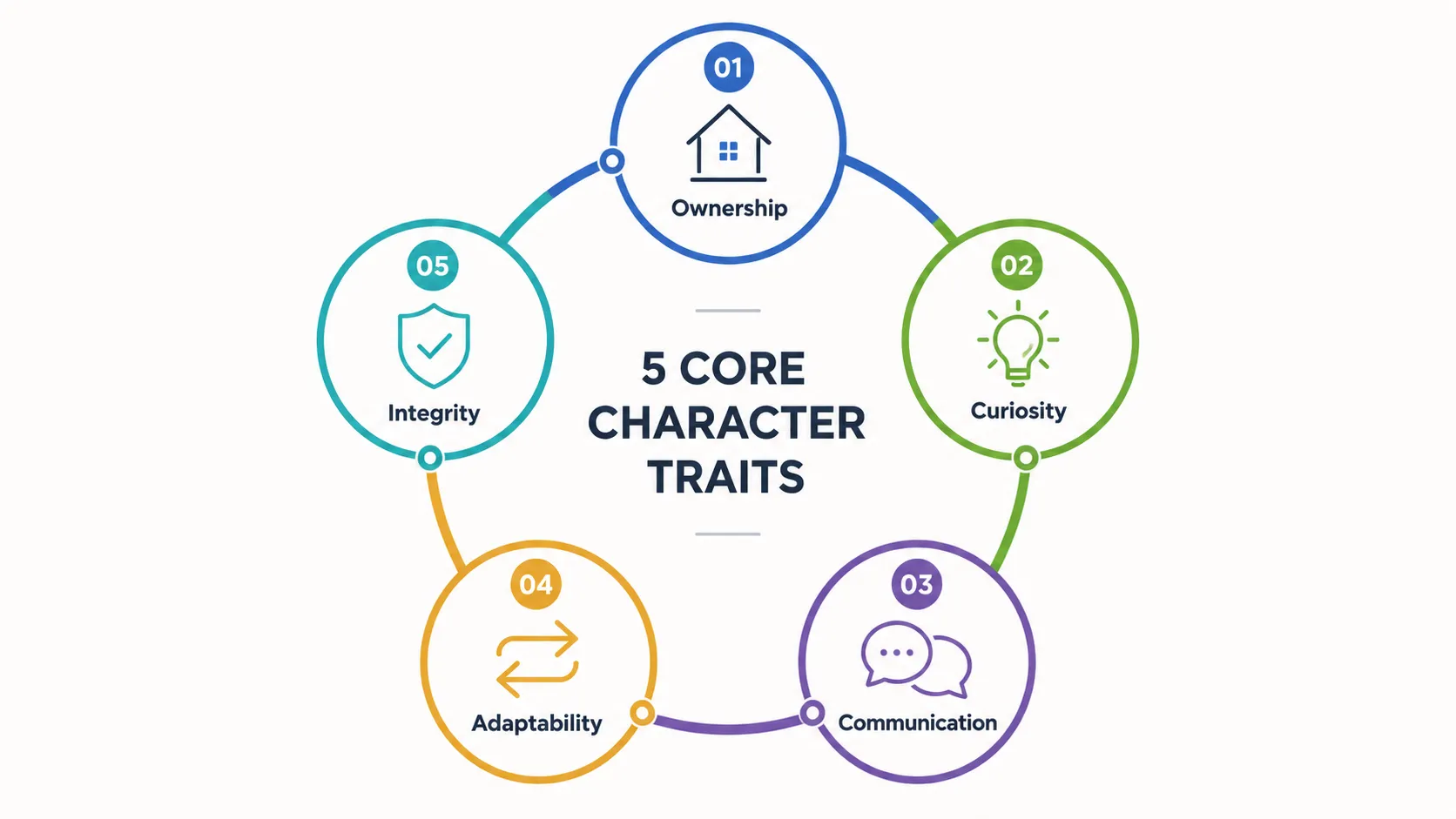
Character isn’t a vague feeling. It’s a set of observable traits that predict how someone will behave in your specific environment. For most small businesses, the traits that matter most are:
Ownership. Do they take responsibility for outcomes, or do they default to blaming circumstances? Ask about a project that went sideways. Listen to whether they talk about what they did differently or what other people did wrong.
Curiosity. Are they genuinely interested in learning and improving, or do they coast on what they already know? Ask what they’ve taught themselves recently. People who learn on their own are the kind of people who grow with your business.
Communication. Can they express themselves clearly and listen actively? In a small team, every conversation counts. Ask them to explain something complex from their last role. Watch whether they simplify or overcomplicate.
Adaptability. Small businesses change fast. Roles shift. Priorities pivot. Ask about a time their job description changed unexpectedly. The answer tells you whether they embrace change or resist it.
Integrity. Will they do the right thing when nobody is watching? Ask about a time they had to deliver bad news or admit a mistake. How they tell the story tells you everything about how they’ll operate on your team.
Interview Questions That Reveal Character
Standard interview questions get rehearsed answers. Character-revealing questions catch people off guard in a good way. Here are five we use at Building Brands Marketing:
“Tell me about the best team you’ve ever been part of. What made it work?” This tells you what kind of environment they thrive in. If their answer describes a culture similar to yours, that’s a strong signal.
“What’s something you changed your mind about in the last year?” People with intellectual humility and curiosity answer this easily. People who think they’re always right struggle with it.
“Describe a time you received feedback that was hard to hear. What happened next?” This reveals whether they’re coachable. In a small team, feedback has to flow freely. If someone shuts down when challenged, your team dynamic suffers.
“If I called your last team and asked what it was like to work with you on a stressful day, what would they say?” This question bypasses the polished self-description. People tend to answer more honestly when they imagine their coworkers speaking for them.
“What matters more to you: doing things right or doing them fast?” There’s no wrong answer. But the answer tells you whether they’ll fit your pace and your standards. And the nuance in how they explain it reveals their priorities.
Credentials Still Count, Just Not First
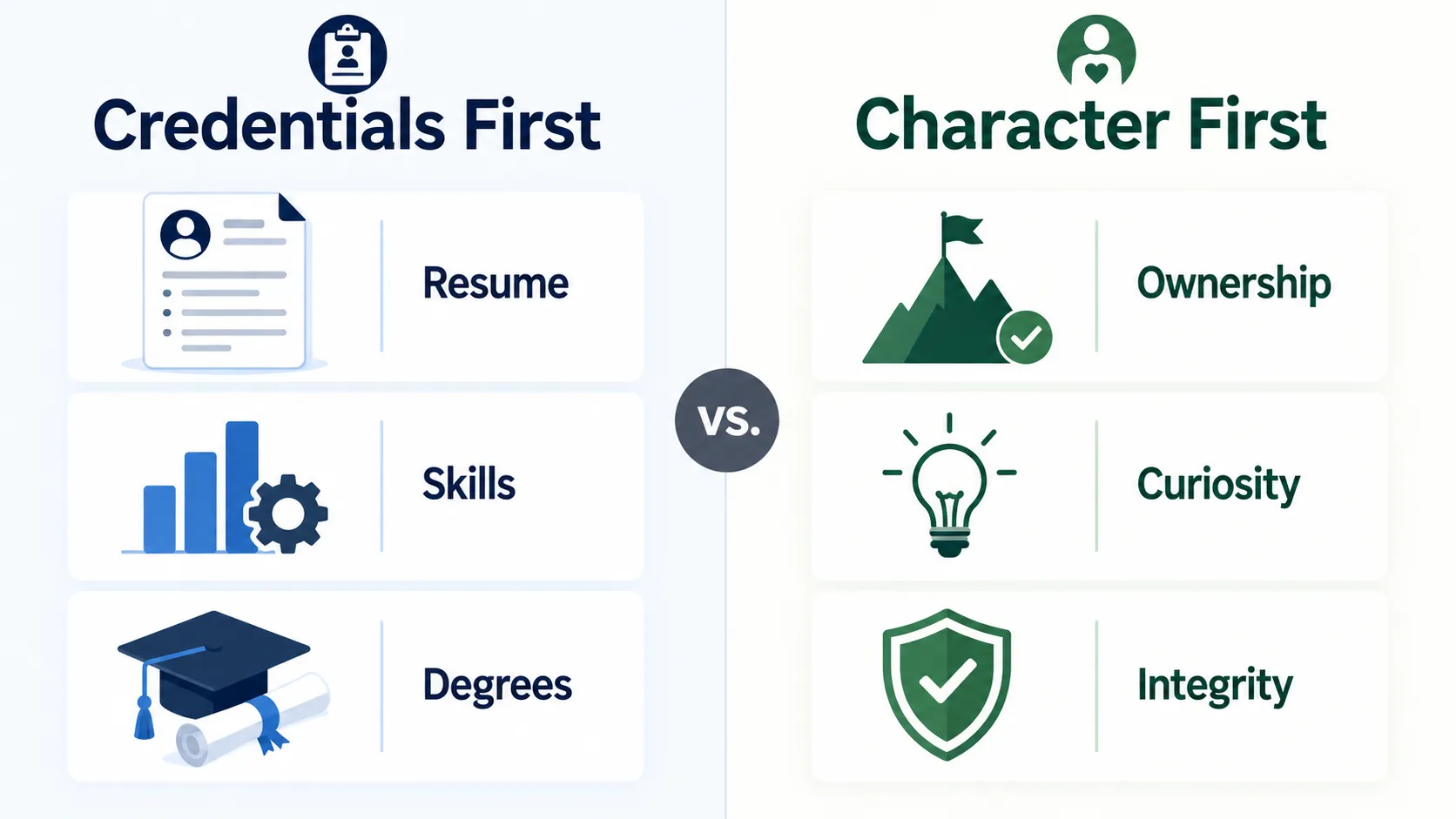
This isn’t about ignoring experience or skills. It’s about the order of evaluation. Screen for character first. If someone passes that bar, then evaluate their skills. A person with strong character and 60% of the skills you need will outperform a person with perfect skills and poor character every single time in a small team.
Skills gaps can be closed with training, mentorship, and practice. Character gaps can’t be closed with a workshop. When you build a team of good people who care about the work and each other, you’ve built something that compounds. The skills will come. The culture will be rock solid from day one.
Building Brands Marketing was built by hiring for character first. It’s why our team delivers the way they do, and it’s why our clients stick around. If you’re building a team and want a marketing partner that understands what it takes, we’d love to talk.
Frequently Asked Questions
Why should small businesses hire for character over credentials?
In small teams, one person’s attitude affects everyone. Skills can be taught through training, but character traits like ownership, adaptability, and integrity are established patterns that predict long-term team success.
What interview questions reveal character?
Ask about the best team they’ve been on, a time they received tough feedback, something they recently changed their mind about, and what their last team would say about working with them on a stressful day.
Do credentials still matter when hiring?
Yes, but they should be the second filter, not the first. Screen for character alignment first, then evaluate skills. A strong-character hire with 60% of the needed skills will outperform a perfect-skills hire with poor character in a small team.